Dimensional Shingles vs. Luxury Shingles: Is the Upgrade Worth It?
Roofing estimates across Maryland carry a stark line-item decision that leaves many homeowners second-guessing their budget. Moving from standard architectural materials to premium slate-look products adds thousands of dollars to a project, yet contractors rarely explain the structural math behind that price jump. In coastal and suburban Mid-Atlantic communities, a roof protects more than curb appeal. It faces humid summer temperature spikes, winter freeze-thaw cycles, and sudden coastal windstorms blowing off the Chesapeake Bay.
Deciding between dimensional shingles and luxury shingles requires weighing long-term structural value against upfront capital outlay. While both options represent a significant step up from traditional three-tab roofing, they serve distinctly different structural, aesthetic, and financial functions. Before committing to a major upgrade, review what a home improvement contract should include to ensure all material upgrades, specifications, and warranty coverage are explicitly defined.
What Is the Difference Between Dimensional and Luxury Shingles?
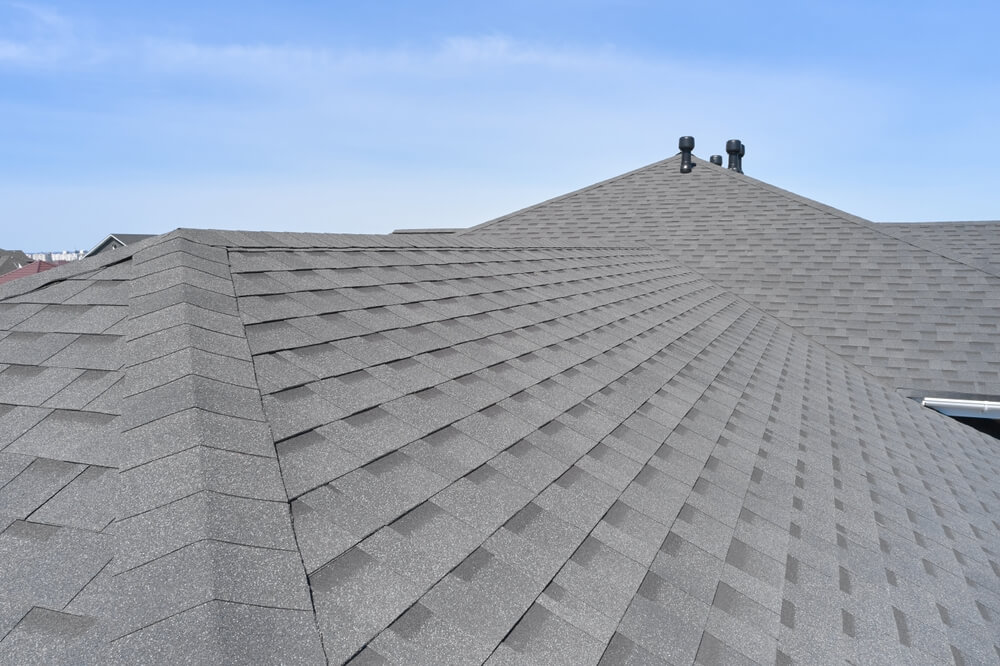
Dimensional shingles feature a two-layer laminated asphalt construction designed to mimic traditional wood shake roofs. Luxury shingles are multi-layered, heavy-weight asphalt products engineered to replicate natural slate. Luxury shingles offer superior wind resistance, thicker wear layers, and dramatic depth, but require significantly higher material and labor investments.
Dimensional shingles, frequently referred to as architectural or laminated shingles, consist of two asphalt-saturated fiberglass mats bonded together.
Cutouts in the top layer create a dimensional, shaded visual effect that simulates wood shakes. They weigh approximately 230 to 250 pounds per square (a roofing “square” equals 100 square feet) and offer an elevated appearance compared to flat, single-layer roofing.
Luxury shingles, often categorized as presidential or grand composite shingles, utilize a multi-ply construction with up to three full layers of asphalt and matting. Weighing between 400 and 450 pounds per square, these products are nearly twice as heavy as dimensional shingles. Their physical thickness creates deep shadow lines and geometric shapes that closely mirror natural slate tiles or hand-split shakes.
Beyond aesthetics, the physical mass of a luxury shingle drastically alters how a roof performs under environmental stress. The added weight provides physical ballast against wind uplift and creates a thicker barrier against physical impacts.
- Construction Layers: Dimensional shingles use a dual-ply design, while luxury shingles feature a multi-ply construction up to three layers thick.
- Visual Profile: Dimensional shingles emulate hand-cut wood shake, whereas luxury shingles replicate multi-dimensional slate tiles.
- Material Weight: Dimensional shingles weigh 230–250 lbs per square, whereas luxury shingles average 400–450 lbs per square.
- Overall Physical Density: Luxury products contain significantly more asphalt and mineral granule volume per square foot, slowing down long-term weathering.
How Do Dimensional and Luxury Shingles Compare in Cost Across Maryland?
Dimensional shingles generally cost between $450 and $650 per square installed on Maryland homes. Luxury shingles range from $750 to $1,200 per square installed. Higher raw material costs, specialized flashing details, and the structural labor required to handle double the weight drive the price difference.
For a standard 2,000-square-foot home requiring a 20-square roof replacement, installed costs typically fall within these ranges:
- Dimensional Shingles: $9,000 – $13,000 total installed cost
- Luxury Shingles: $15,000 – $24,000 total installed cost
The cost variance extends beyond the raw price of the shingles. Upgrading to a luxury line impacts several downstream labor and material variables across the job site:
- Structural Sheathing Verification: Roof decks must be inspected to ensure the rafters and plywood decking can handle the 400+ lbs per square weight load.
- Specialized Fastening: Heavy-weight shingles require specialized, longer roofing nails and precise nailing patterns to secure the multi-ply mat without tearing.
- Accessory Requirements: High-end shingle systems demand heavy-duty ice and water shields, premium synthetic underlayments, and custom-bent copper or heavy-gauge aluminum flashings.
- Tear-off and Disposal Fees: Removing an existing heavy roof deck or disposing of high-density waste material increases landfill tipping fees across Southern Maryland counties.
The structural labor necessary to handle heavy-weight materials accounts for a substantial portion of the cost difference. Carrying, positioning, and cutting 450-pound-per-square materials on steep slopes requires more manpower and extended installation timelines compared to standard architectural materials.
Can Luxury Shingles Lower Your Maryland Homeowners Insurance Premiums?
Maryland Law requires insurers to offer premium discounts for storm mitigation improvements, including reinforced roof coverings. While luxury shingles often carry Class 4 impact ratings that qualify for discounts, policyholders must verify specific policy credits with their carrier before committing to the material upgrade.
Under Maryland Code, Insurance § 19-210, insurance companies writing homeowners policies in Maryland are legally mandated to offer actuarially justified premium discounts for storm mitigation measures. The statute explicitly lists reinforced roof coverings alongside secondary water barriers and storm shutters as qualifying upgrades.
To qualify for these policy credits, the installed roofing material must hold a recognized impact classification, typically a UL 2218 Class 4 rating. During laboratory testing under UL 2218 standards, a two-inch steel ball is dropped twice from a height of 20 feet onto the same spot on a shingle. To pass Class 4 standards, the backside of the shingle mat must show zero cracking or structural fracturing.
Many luxury shingle lines achieve Class 4 ratings through polymer-modified asphalt formulations (SBS modification) or reinforced backing scrims. Dimensional shingles are also available in Class 4 configurations, but standard dimensional lines generally carry lower impact ratings. Homeowners should request the manufacturer’s official UL 2218 testing data sheet from their contractor and submit it directly to their insurance provider to confirm exact annual savings.
Key Insurance Considerations for Maryland Homeowners:
- Statutory Mandate: Insurance carriers operating in Maryland are required under § 19-210 to offer documented discount structures for reinforced roof coverings.
- Verification Process: Premium discounts are not applied automatically; policyholders must submit an itemized contract and testing certificates.
- Required Installation Standards: Discounts frequently require installation by a contractor licensed through the Maryland Home Improvement Commission (MHIC).
- Deductible Impact: Installing impact-resistant coverings can help prevent damage that would otherwise trigger separate percentage-based wind or hurricane deductibles.
How Do Luxury Shingles Hold Up Against Southern Maryland Weather Patterns?
Luxury shingles provide superior defense against severe Mid-Atlantic weather, offering standard wind resistance ratings up to 130 mph and exceptional tear resistance during coastal nor’easters. Their heavy asphalt mass resists micro-cracking from freeze-thaw cycles and high summer humidity near the Chesapeake Bay.
Roofing systems installed in coastal and inland Maryland face a harsh combination of environmental threats throughout the year:
- Severe Wind Uplift: Coastal nor’easters and tropical storm remnants sweeping up the Chesapeake Bay generate sustained winds and powerful gusts. The sheer weight of luxury shingles, combined with heavy-duty factory sealant strips, creates high resistance to blow-offs.
- Temperature Extremes and Moisture: Summer surface temperatures on dark Maryland roofs can exceed 150°F, followed by winter freeze-thaw cycles. The additional asphalt mass in luxury shingles slows down the loss of volatile oils, preventing the early embrittlement that causes shingles to crack at the nail line.
- Wind-Driven Debris: Properties in wooded areas across Calvert, St. Mary’s, and Anne Arundel counties face falling limbs and airborne debris during severe storms. A thicker multi-ply shingle absorbs impacts that would otherwise puncture a standard dual-layer roof.
- High Humidity and Algae Growth: Humidity along the coastal plain promotes black streaks caused by Gloeocapsa magma algae. High-end shingle lines incorporate elevated concentrations of copper-coated granules to maintain clean surface aesthetics over decades.
The physical construction of luxury materials creates an added layer of defense against localized limb strikes. While a standard dual-layer shingle can puncture under the force of a falling oak or pine branch, a multi-ply composite shingle often absorbs the strike without breaching the underlayment, preserving the underlying roof deck.
Does a Luxury Shingle Roof Add Real Resale Value to a Maryland Home?
Luxury shingles yield a strong return on investment on high-value, historic, or architecturally distinct properties where curb appeal directly impacts appraisal value. For standard suburban homes, high-end dimensional shingles often offer a better percentage cost-to-value return upon resale.
Appraisers and real estate buyers evaluate roof upgrades through two distinct lenses: structural condition and architectural harmony. A luxury shingle roof provides a striking visual upgrade that elevates steep-sloped roofs visible from the street. On historic homes, Victorian designs, Tudor estates, or custom waterfront properties in towns like Annapolis or Solomons, installing a flat dimensional shingle can look out of scale. On these structures, luxury shingles preserve architectural integrity and support high market valuations.
Conversely, on standard mid-range suburban homes, installing a top-tier luxury shingle may exceed neighborhood expectations without offering a dollar-for-dollar return at closing. A premium dimensional shingle typically yields a higher percentage cost recovery on mid-tier homes by providing a fresh, modern look while keeping overall replacement costs aligned with neighborhood comps.
When evaluating resale impact across Maryland housing markets, consider these key dynamics:
- Neighborhood Price Ceilings: Installing a luxury roof in a neighborhood of standard architectural shingles rarely yields a full dollar-for-dollar valuation increase.
- Steep-Slope Visual Prominence: Properties with high-pitch roof lines display up to 50% of their front elevation as roofing material, multiplying the visual impact of slate-look products.
- Buyer Perceptions: High-end home buyers in coastal markets evaluate roof age and material durability closely to avoid near-term storm damage repairs.
- Appraisal Adjustments: Appraisers apply positive condition adjustments for roofs with verifiable 40- to 50-year service life ratings and transferable, non-prorated warranties.
What Is the Expected Lifespan and Warranty Coverage for Each Shingle Class?
Dimensional shingles carry limited lifetime warranties with real-world service lives of 25 to 30 years. Luxury shingles carry extended non-prorated warranty coverage periods and routinely last 40 to 50 years due to elevated asphalt content, thicker mats, and superior granule retention.
Comparing manufacturer warranties requires looking past the word “Lifetime” on the packaging to analyze non-prorated coverage windows, wind speed limits, and transferability terms.
Roofing Class Comparison Overview:
Dimensional Shingles
- Expected Service Life: 25 – 30 Years
- Non-Prorated Protection Period: 10 Years
- Standard Wind Warranty: 110 mph (upgradable to 130 mph with specialized installation)
- Material Mass: Standard dual-ply thickness
Luxury Shingles
- Expected Service Life: 40 – 50 Years
- Non-Prorated Protection Period: 20 – 50 Years (depending on manufacturer and installer certification)
- Standard Wind Warranty: 130 mph baseline
- Material Mass: Multi-ply heavyweight construction
The extended non-prorated window on luxury products provides crucial financial protection. During the non-prorated period, if a manufacturing defect causes failure, the manufacturer covers 100% of material and labor costs to replace the affected area. Once a policy enters the prorated phase, the payout drops each year steadily based on the age of the roof.
How Do Environmental and Weight Factors Affect Your Roof Deck?
Luxury shingles add significant dead weight to a residential roof structure, requiring careful deck inspection prior to installation. While standard roof framing built to Maryland building codes supports these heavy-weight composite shingles, aging or damaged roof decks may require reinforcement.
A standard 2,000-square-foot roof covered in dimensional shingles carries roughly 4,800 to 5,000 pounds of roofing material. Replacing that same roof with a multi-ply luxury product increases the dead load to between 8,000 and 9,000 pounds. This dramatic weight shift makes pre-installation structural evaluation essential.
Key structural checks required before installing heavy-weight materials:
- Sheathing Thickness: Plywood or OSB decking must be at least 1/2-inch thick, sound, and fully secured to rafters.
- Structural Rafter Spacing: Rafters spaced 24 inches on center must be inspected for sagging or prior water damage.
- Fastener Engagement: Heavy-weight shingles require longer nails that penetrate through the full thickness of the decking wood.
- Ice and Shield Placement: Weight concentration at the eaves requires ice and water protection membranes to prevent thermal movement leaks.
Installing high-density materials over sagging rafters or compromised plywood can cause visible dip lines across the roof plane and accelerate granule loss. A thorough evaluation by a licensed contractor ensures your roof framing supports heavy composite materials safely.
Should You Upgrade to Luxury Shingles on Your Maryland Property?
Upgrading to luxury shingles makes sense if you plan to remain in your home long-term, own a high-value or steep-sloped property, or live in a coastal area prone to severe winds. Premium dimensional shingles remain the practical choice for homeowners seeking strong protection at a moderate price point.
To determine the right choice for your home, evaluate these core decision factors:
- Home Ownership Timeline: If you plan to sell within five to seven years, a quality dimensional shingle provides maximum cost recovery. If this is your long-term family home, the extended lifespan of a luxury shingle lowers your amortized annual cost of ownership.
- Roof Pitch and Visibility: Roofs with steep slopes (8:12 pitch or higher) show a vast amount of surface area from the ground. The deep shadow lines of luxury shingles maximize visual impact on steep roofs. Low-slope roofs hide much of the shingle surface, rendering high-end visual profiles less noticeable.
- Surrounding Tree Canopy: Homes tucked beneath mature oak or walnut trees benefit heavily from the impact resistance and puncture defense inherent to thick, heavy-weight shingle mats.
- Neighborhood Context: Align your material selection with surrounding property standards to avoid under-improving or over-improving for your immediate real estate market.
Taking time to evaluate these structural, aesthetic, and financial variables ensures that your material choice delivers long-term satisfaction and reliable protection for your Mid-Atlantic property.
Work with Experienced Maryland Roofing Professionals
G.H. Clark Contractors has served homeowners across Southern Maryland, including Calvert, St. Mary’s, and Anne Arundel counties for over 30 years. Our team provides comprehensive, line-item estimates detailing exact material specifications, wind ratings, and manufacturer warranty coverage. We believe in providing clear facts so you can make an informed investment decision for your property. To discuss your roofing project or schedule a free, detailed estimate, contact us today.
Frequently Asked Questions
Do luxury shingles require extra structural support on a roof deck?
In most residential applications, standard roof framing built to Maryland building codes easily supports the weight of luxury shingles. However, if your roof deck has compromised plywood or lightweight rafters, a contractor must verify structural integrity before installing materials weighing over 400 pounds per square.
How do dimensional and luxury shingles compare in fire resistance?
Both dimensional and luxury shingles typically carry a Class A fire rating, the highest protection level available for residential roofing. This rating indicates superior resistance to external fire exposure originating outside the structure, such as flying embers from chimney fires or wildland brush fires.
Are luxury shingles harder to repair after storm damage than dimensional shingles? Luxury shingles are thicker and stiffer, which can make individual shingle replacement slightly more labor-intensive, especially during cold weather when the asphalt is less pliable. However, because luxury shingles offer higher wind and tear resistance, they experience storm damage far less frequently than standard shingles.
Can you lay luxury shingles over an existing dimensional shingle roof?
A complete tear-off is strongly recommended and often required when installing luxury shingles. Placing heavy-weight luxury shingles over an uneven existing roof prevents the thick mats from sealing correctly, voids manufacturer warranties, and risks exceeding local building code weight allowances.
Do color options differ significantly between dimensional and luxury lines?
Luxury shingle lines focus heavily on rich, natural color palettes designed to imitate natural slate and aged wood shake, such as weatherwood, charcoal black, slate green, and burnt sienna. Dimensional lines offer a broader array of standard solid colors and high-contrast blend options suited for traditional suburban architectural styles.
What documentation is required to claim the Maryland storm mitigation insurance discount?
To receive a premium credit under Maryland Law, insurers usually require an itemized contract showing the specific shingle brand and product line, the manufacturer’s data sheet confirming a UL 2218 Class 4 impact rating, and proof of installation by a contractor licensed by the Maryland Home Improvement Commission (MHIC).