
How We Protect Your Home During a Roof Installation in Southern Maryland
Most homeowners researching a roof replacement focus on the obvious questions: What material should I choose? How much will it cost? How long will it take? But once the work is scheduled and the crew is about to arrive, a different set of questions takes over—and they’re often the ones that keep people up at night.
Will my landscaping survive? What about the perennials I’ve been tending for five years? Are nails going to end up in my driveway? Will my AC unit get hit by a falling shingle? Will my windows get scratched? Will my hardwood floors track in pollen and granules for weeks afterward?
These concerns are valid. A roof replacement is a heavy, fast-moving job. Old shingles, nails, sealant scraps, and decking offcuts come down at speed, and a crew that isn’t set up properly can do real damage to the property below. The difference between a roofing company that respects your home and one that doesn’t shows up in the details—the tarps, the plywood ramps, the magnetic sweepers, the way the team walks through your yard at the end of the day.
At G.H. Clark Contractors, protecting your property is built into our installation process. Over more than three decades of roofing homes across Calvert County, Charles County, St. Mary’s County, and Anne Arundel County, we’ve developed a jobsite protection system that addresses every part of your home and yard that’s at risk during a roof replacement. This page walks you through exactly what we do, why we do it, and what you can expect when our crew pulls up on installation day.
Why Does Jobsite Protection Matter as Much as the Roof Itself?
Jobsite protection matters because a careless roof replacement can cause thousands of dollars in damage to landscaping, siding, windows, HVAC units, and vehicles—damage that’s often not covered by the original contract. Homeowners frequently end up paying twice: once for the new roof, and again for the property restoration. A proper protection system is the single biggest indicator of a contractor’s professionalism and respect for your home.
Here’s what actually falls off a roof during a typical asphalt shingle replacement:
- Old asphalt shingles, often in large strips containing dozens of nails
- Roofing nails by the hundreds—typically 320 nails per square (100 square feet), which adds up fast on a 2,500-square-foot roof
- Shingle granules and fragmented mineral coating that can stain concrete and damage plants
- Old underlayment, flashing scraps, and sealant pieces
- Section of damaged decking when rot is discovered underneath
Now imagine all of that landing on a flower bed, an air conditioning condenser, a parked car, or a child’s play set. Without proper protection, the consequences can include:
- Crushed shrubs and trampled perennials
- Nails embedded in lawns that surface for years afterward and find tires, bare feet, and lawnmower blades
- Bent or damaged AC condenser fins from falling debris
- Scratched siding from shingle bundles being staged against the house
- Dented vehicles and cracked windshields from misjudged tear-off paths
- Stained driveways and walkways from shingle granules and roofing tar
These aren’t hypothetical. We’ve repaired the aftermath of other contractors’ work more times than we can count. That’s exactly why we built the protection system you’re about to read about.
How Does G.H. Clark Physically Protect Your Property During a Roof Replacement?
G.H. Clark protects your property through a six-stage system: a pre-job walkthrough to identify every at-risk feature, perimeter mesh tarping to catch falling debris, dedicated landscaping and garden coverings, window and siding protection, HVAC and driveway barriers, and meticulous daily cleanup using magnetic nail sweepers. Each stage is designed to address a specific vulnerability so that nothing on your property is left exposed.
Stage 1: Pre-Job Walkthrough and Property Assessment
Before a single shingle comes off, our project manager walks the entire property. We identify everything that needs protection or staging consideration: garden beds, mature shrubs, fragile ornamentals, the AC condenser, the deck, outdoor furniture, the koi pond if you have one, the kids’ swing set, and where you’ll need to park during the job. This walkthrough also flags anything that needs to be temporarily moved—grills, planters, patio cushions, and pool floats are common items we ask you to bring inside the night before.
If you have unique features that need special handling—a slate walkway, an irrigation system, exposed sprinkler heads near the foundation, an art installation in the garden—this is when we plan around them. The walkthrough takes 20–30 minutes and prevents the vast majority of jobsite problems before they can happen.
Stage 2: Perimeter Tarping and Catch-All Systems
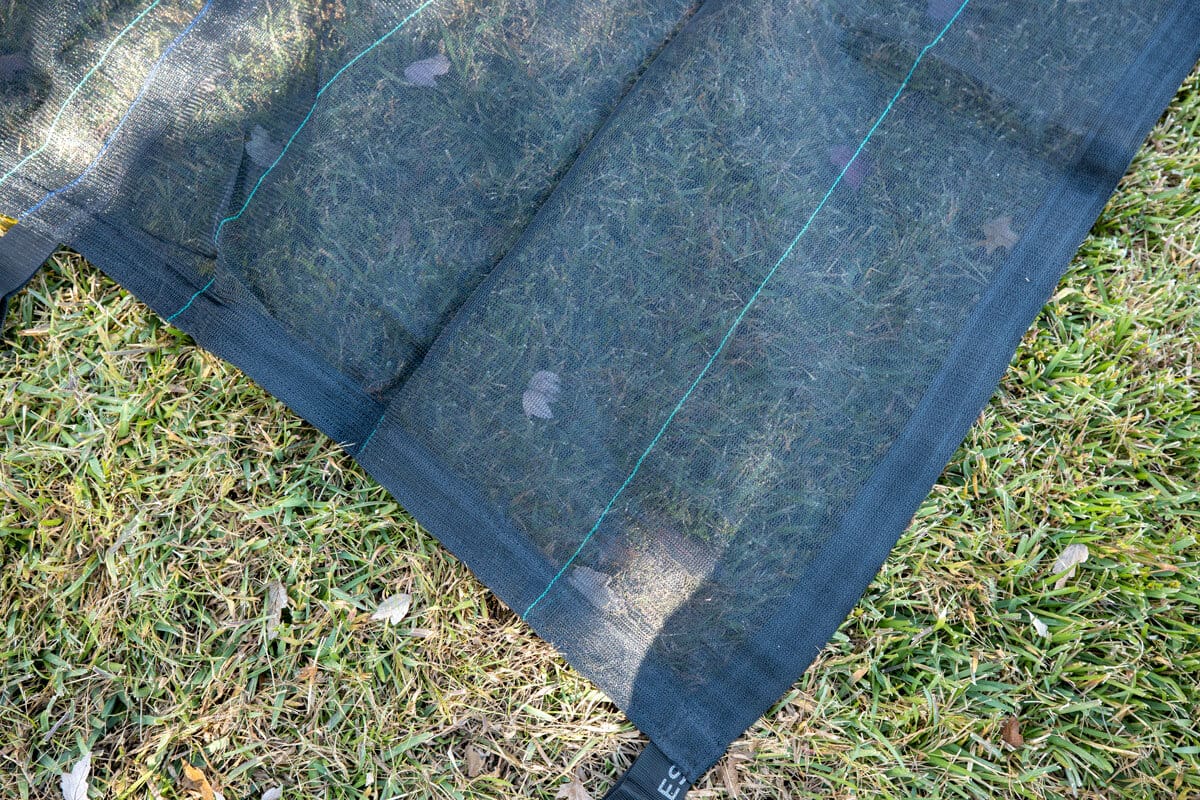
On installation morning, the first thing the crew does is set up our perimeter protection system. Heavy-duty mesh tarps are anchored to the ground and lifted against the side of the house at every point where tear-off will occur. The tarps form a physical barrier that catches falling shingles, nails, and debris before they reach the ground. For homes with multiple roof planes, we set up zone-by-zone protection so the catch-all moves with the work.
For two-story homes—common in subdivisions across Dunkirk, Huntingtown, and Owings—we use taller catch-all arrays to handle the increased fall distance and lateral spread. The tarps are not just stretched flat on the ground; they’re shaped to funnel debris into containment zones that get emptied throughout the day.
Stage 3: Landscaping, Gardens, and Outdoor Features
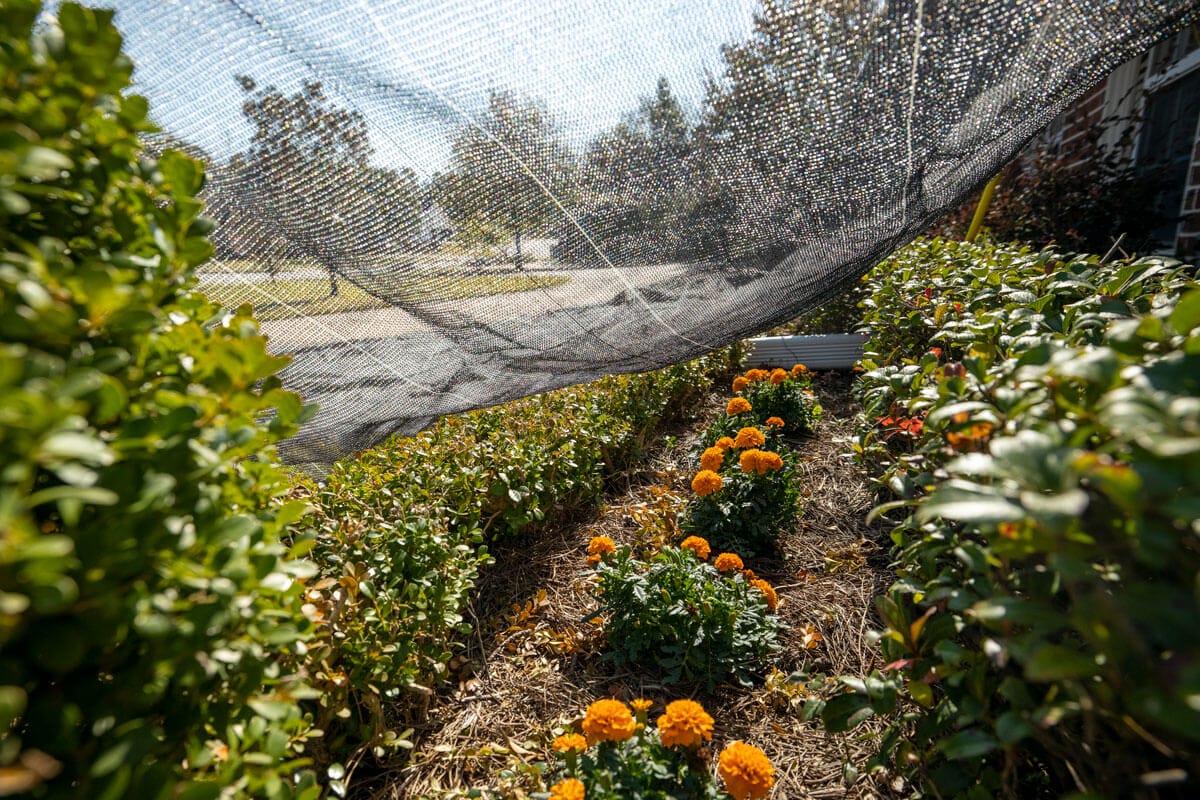
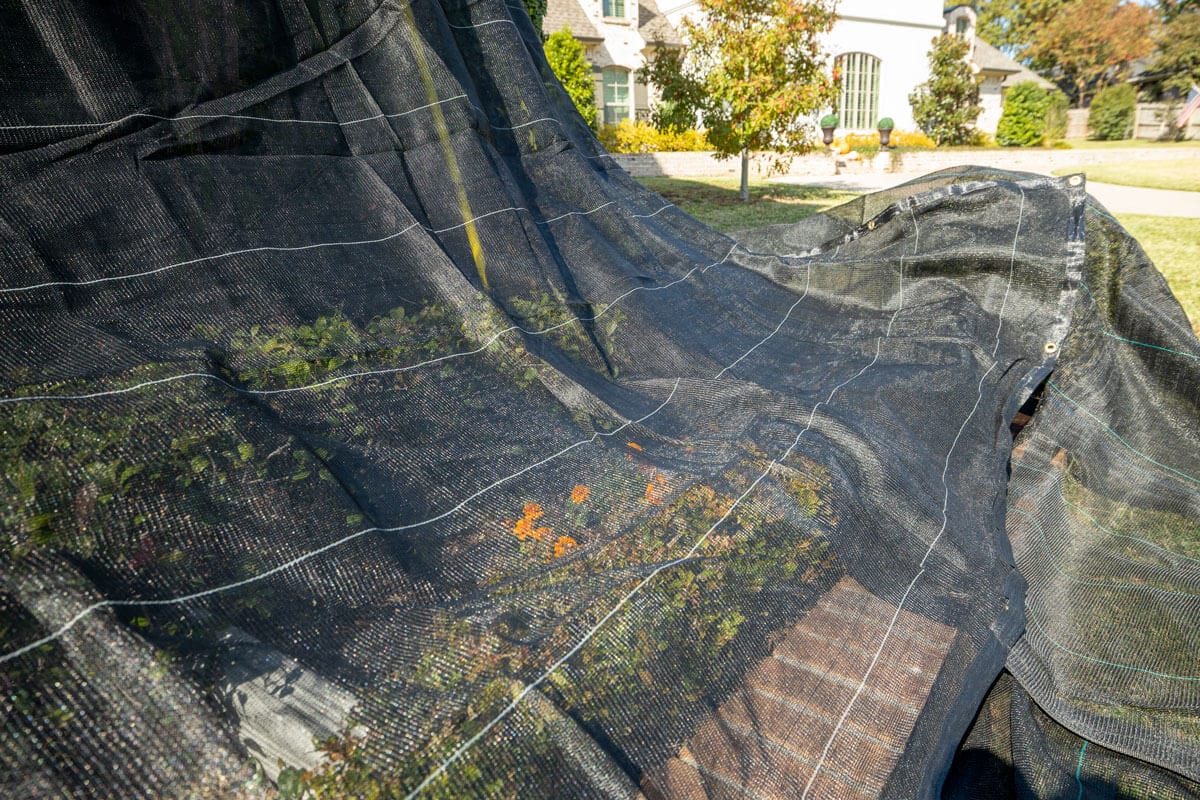
Landscaping protection is where most roofing crews cut corners, and it’s where homeowners take the biggest hits. Our approach: any plant within the debris fall zone gets dedicated coverage. Smaller shrubs and perennial beds are tented with breathable protective covers that allow airflow but block falling debris. Larger ornamentals are individually shielded with plywood ramps angled to deflect debris away from the root zone.
Garden beds, mulched areas, and vegetable patches get full-coverage tarping. After the work is complete, the tarps are rolled in toward the center to consolidate debris before lifting—a technique that prevents stray nails and granules from falling into the planting bed as the tarp comes off.
Stage 4: Windows, Siding, and Exterior Wall Protection
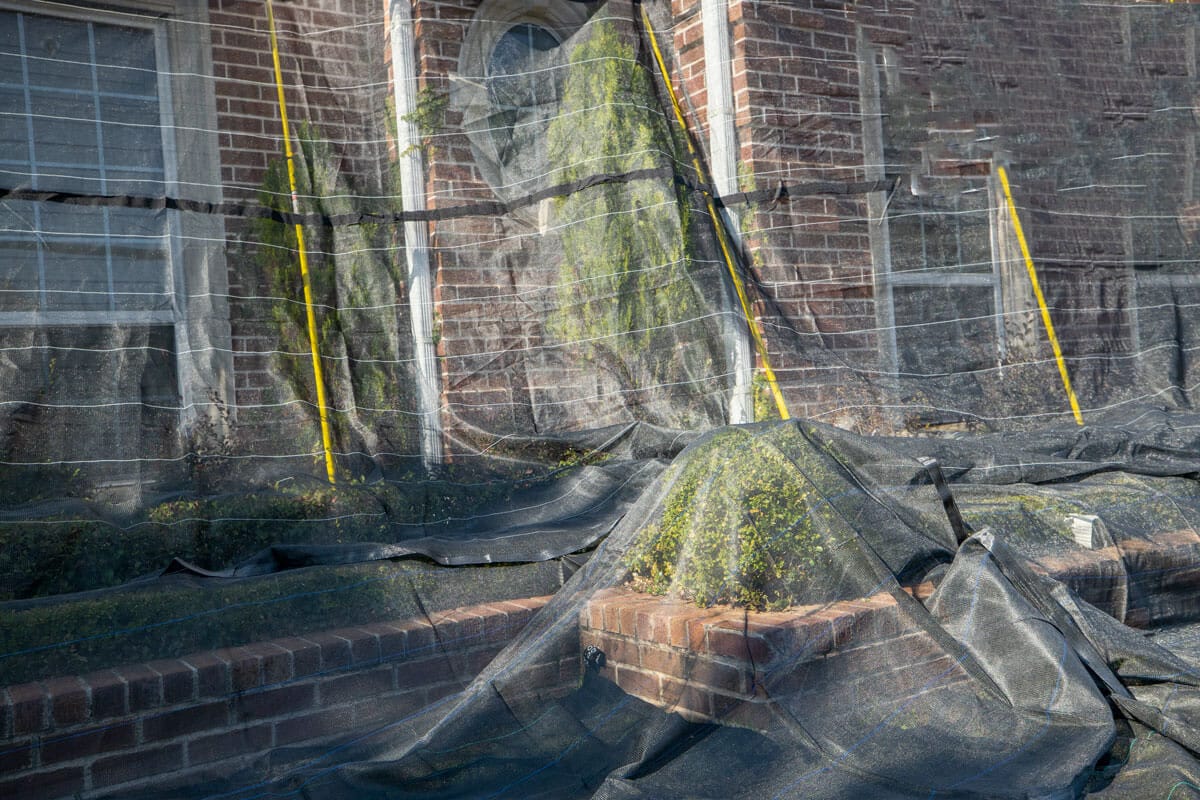
Falling shingles don’t just go down—they can also swing into the side of the house. We protect ground-floor and second-floor windows with foam-padded plywood panels when there’s any chance debris could swing into them. The same goes for siding sections directly below tear-off zones: we install soft padding or plywood deflectors to prevent scratches and impact dents.
This is especially important on homes near the Chesapeake Bay where vinyl and fiber cement siding investments have been recent and expensive. We treat your siding as if it’s our own.
Stage 5: HVAC, Driveway, and Vehicle Protection
Your AC condenser is one of the most vulnerable items on the property during a roof replacement. The aluminum fins can be bent or punctured by a single falling shingle bundle, and a damaged condenser can mean a costly repair or replacement. We wrap the condenser in foam padding and cover it with a rigid plywood shield before the first nail comes out.
Driveways get protected with tarps in any zone where shingle bundles will be staged or where the dumpster will sit. We also lay plywood ramps in any area where wheelbarrows or equipment will roll over a softer surface like a brick walkway or stamped concrete. If your vehicle needs to stay home during the project, we’ll work with you to designate a safe parking location well clear of the work zone—typically across the street or on a side road.
Stage 6: Daily Cleanup and Magnetic Nail Sweepers
The single most consistent compliment we receive in our 4.9-star Google reviews is about our cleanup. Here’s what that actually looks like.
At the end of every workday on a multi-day project, the crew breaks down the catch-all tarps and empties debris directly into the on-site dumpster. We then perform a magnetic sweep of the lawn, garden beds, walkways, driveway, and the street in front of your home. Our sweepers are industrial-grade magnetic bars that pick up nails buried in grass, mulch, and gravel—the nails you’d otherwise find later with a lawnmower or a bare foot.
After the final day of work, we repeat the full magnetic sweep at least twice and walk the property with you to confirm everything looks the way it did before we arrived. If we find anything that doesn’t pass that test, we fix it before we leave.
What Specific Tools and Materials Do We Use to Protect Your Home?
G.H. Clark uses a specific set of jobsite protection materials including heavy-duty mesh debris tarps, plywood deflectors and ramps, breathable plant covers, foam padding for HVAC and siding, industrial magnetic nail sweepers, and dedicated containment bins for debris. Each tool addresses a specific vulnerability identified during the pre-job walkthrough.
| Tool / Material | What It Protects | Why It Matters |
| Heavy-duty mesh tarps | Lawn, garden beds, mulched areas, walkways | Catches shingles, nails, and granules before they reach the ground. |
| Plywood deflectors and ramps | Larger shrubs, ornamentals, fragile walkways, brick patios | Redirects falling debris and supports wheelbarrow traffic without surface damage. |
| Breathable plant covers | Perennials, vegetable gardens, smaller shrubs | Blocks debris while allowing airflow so plants don’t suffocate. |
| Foam padding and plywood shields | Windows, siding, AC condensers, decks | Prevents impact damage from swinging shingles and falling tools. |
| Industrial magnetic sweepers | Lawn, driveway, garden beds, street | Picks up nails that fall outside catch-all zones—including buried nails in turf. |
| Dedicated debris containment bins | All work zones | Keeps tear-off material consolidated and prevents wind-scattered debris. |
How Does Maryland’s Climate Affect Jobsite Protection?
Maryland’s seasonal weather adds specific protection challenges. Spring brings pollen and wet ground that complicate landscape protection. Summer heat stress can damage plants kept under tarping for extended periods. Fall leaf drop mixes with roofing debris and complicates cleanup. Coastal wind near the Chesapeake Bay can disperse debris widely if catch-all systems aren’t properly anchored. We adjust our protection approach based on the season and the property’s exposure.
| Season | Protection Challenge | Our Adjustment |
| Spring | Wet, soft ground; pollen and seed debris mixing with roofing material; active perennial growth | Heavier plywood ramps over softer turf; extra magnetic sweeps to separate pollen from granules; careful plant coverings that don’t crush new growth |
| Summer | Heat stress on covered plants; sun damage to vinyl siding from reflected light off tarps; thunderstorm interruptions | Breathable plant covers; short-cycle tarping (uncover whenever work pauses); weather-watch protocols to secure debris before storms |
| Fall | Leaves and sweet gum balls mixing with shingle debris; ground harder and more prone to scuff marks; cooler temperatures changing how sealants behave | Separate cleanup passes for organic vs. roofing debris; additional driveway protection during prime leaf drop |
| Winter | Frozen ground that’s easier to clean but harder to anchor; potential snow or ice on work zones | Weighted anchoring of catch-all tarps; pre-job snow clearance from staging areas; cold-rated adhesives and sealants |
| Year-round (Bay area) | Coastal wind near Chesapeake Beach, Solomons, and North Beach can scatter debris well beyond standard catch-all zones | Extended perimeter catch-alls; heavier anchoring; wind-watch criteria for halting tear-off temporarily |
What Areas of Your Property Are Most at Risk During a Roof Replacement?
The five highest-risk zones during a roof replacement are landscaping directly below the roof edge, HVAC condensers placed near the house, windows and siding within debris fall paths, driveways used for staging or dumpsters, and any exposed walkways or patios used as crew paths. Identifying these zones in advance and protecting them specifically is the foundation of a damage-free job.
- Landscaping along the drip line. The ground directly below the roof edge takes the most punishment. This is where catch-all tarps and plant covers are most critical.
- HVAC condensers. Modern condensers are typically placed within a few feet of the house, putting them right in the fall zone. A single bent fin can compromise efficiency; a punctured coil can total the unit.
- First-floor windows and siding. Swinging shingle strips, bundles staged against walls, and tool drops can all cause damage that’s expensive to fix.
- Driveways and walkways. Granule staining, dropped tools, and dumpster wheels can mark up concrete and damage softer surfaces like stamped concrete, brick, and stone.
- Anything you’d hate to lose. Heirloom roses, the maple your daughter planted, the koi pond, the smoker on the back patio—your sentimental items need a plan, and we ask about them during the walkthrough.
What Happens If Something Gets Damaged Despite Our Protection?
Even with extensive protection systems, accidents can occur on a roofing job. When something is damaged on a G.H. Clark project, we document it immediately, communicate with the homeowner directly, and either repair or replace the affected item at our expense. We are fully licensed, bonded, and insured in Maryland, which means homeowners are protected even in the rare event of significant damage.
Honest answer: we’ve been roofing homes for over 30 years, and even with the best system in place, mistakes happen on rare occasions. A plant gets crushed. A windowsill picks up a scratch. A garden hose gets cut. When that occurs, here’s what you can expect from us:
- Immediate communication: The crew lead notifies the project manager, who contacts you the same day with photos and a clear explanation of what happened.
- Full ownership: We don’t deflect, blame the homeowner, or argue about whether something was pre-existing. If we did it, we own it.
- Repair or replacement at our cost: Plants get replaced with comparable specimens. Damaged surfaces get repaired by a qualified pro. Anything we can’t fix ourselves, we hire and pay for the right specialist.
- Insurance backup: As a fully licensed, bonded, and insured Maryland contractor, we carry comprehensive general liability coverage. Significant damage is covered through our policy.
Experience the G.H. Clark Difference on Your Next Roofing Project
Your home isn’t just a roof. It’s the landscaping you’ve spent years cultivating, the AC unit you replaced last spring, the perennials your grandmother gave you, the brick walkway you laid yourself. A roof replacement should leave all of that exactly the way it was on the morning we arrived.
At G.H. Clark Contractors, we’ve built our 30-year reputation in Southern Maryland on doing the job right—and that includes everything we don’t charge extra for: the walkthrough, the tarps, the magnetic sweeps, the patience to do it correctly. We’re a family business, and we treat your property the way we’d want a contractor to treat our own.
Call us at (410) 414-7060 to schedule your free roofing consultation. We’ll walk your property, explain our protection process in person, and provide a transparent, no-pressure estimate. Flexible financing is available.
Frequently Asked Questions About Property Protection During a Roof Replacement
Do I need to move anything off my property before the crew arrives?
We recommend bringing in small, portable items the night before: outdoor furniture cushions, grills, patio decor, planters, pool floats, kids’ toys, and anything else that could be in the way. We’ll handle larger items during the walkthrough. If you have an irrigation system, garden art, or anything fragile we should know about, mention it during the consultation so we can plan around it.
Should my family stay home during a roof replacement?
Most homeowners are comfortable staying home during the work, but the noise is significant—especially during tear-off. If you have small children, pets sensitive to noise, or work-from-home requirements that need quiet, you may prefer to make plans elsewhere for the day. Either way is fine with us.
How do you protect pets during the job?
We ask that pets be kept inside or in a secured area away from the work zone for the duration of the project. Falling debris and the noise of tear-off can frighten animals and cause them to bolt. If you have backyard chickens, an outdoor cat, or other animals that need accommodation, let us know during the walkthrough and we’ll plan around them.
Will there be nails left in my yard after the job?
Our goal is zero. We perform multiple magnetic sweeps during and after the project, covering the lawn, garden beds, driveway, walkways, and the street in front of your home. In the rare event you find a nail after we leave, call us, and we’ll come back to sweep the area again at no charge.
How long does the job site stay set up with all the protection?
Most asphalt shingle roof replacements are completed in a single day, and the protection system goes up at the start and comes down at the end of that same day. For larger or more complex projects that span multiple days, we set up and break down the protection each day to ensure your property is secured overnight.
What if I notice a problem after the crew leaves?
Call us at (410) 414-7060 the moment you notice anything. We respond quickly, document the issue, and resolve it. Our reputation as Southern Maryland’s trusted family roofer depends on follow-through, and we take post-job issues just as seriously as the original installation.
How We Protect Your Home Garden
How We Protect Your Home Grass
How We Protect Your Home Plants
How We Protect Your Home Windows