Decking is becoming an increasingly popular choice in gardens all over the world. The beautiful, natural grains of different woods can compliment planting schemes and the structure of decking brings some real architectural interest to your outdoor space.
To keep your decking looking beautiful all year round, however, you will need to stain it from time to time. This doesn’t only maintain its aesthetic appearance, but also keeps the wood in great condition and ensures it remains safe and solid for years to come.
Contrary to popular belief, there is a little more to staining a deck than simply painting it with wood stain. Preparation, technique, and stain choice all go toward keeping your deck well maintained. Get any of these aspects wrong and you could be headed towards decking-disaster!
Where do you even begin when it comes to staining a deck, though? Sure, you could hire a professional landscaping company to come out and do it for you. But a much cheaper alternative is to do it yourself.
Don’t panic! It’s actually a relatively easy task to undertake and, if done correctly, will not only keep your deck in fantastic condition but will save you a ton of money along the way.
To help make things easier, we’ve put together this ultimate guide on how to stain your own deck. Here you’ll learn everything you need to know to stain your deck yourself, what tools you’ll need, and we’ve even put together some useful tips to help make things even easier.
So, keep reading and pretty soon you’ll be relaxing on your deck while admiring the beautiful stain that you single-handedly applied.
Introduction – Why Stain Your Decking?

Before we get into how to start staining your deck, let’s take a look at why it’s so important to stain your deck. Throughout the year, a deck is exposed to all kinds of extreme weather. From blazing hot sunshine to torrential downpours of rain, your deck is under constant attack.
This can affect the quality of the wood and can cause warping or splitting. Treating your deck with wood stain, however, significantly reduces the chances of this happening.
Your deck also has to withstand everything that you and your family put it through all year round. If you have a deck, you more than likely spend a lot of time out on it during the summer months.
This leads to increased foot traffic scuffing the existing stain, or the occasional spilled glass of wine or condiment dropped during an alfresco grilling session creating an off-color spot on the wood.
Neglecting your decking and allowing natural and human forces to wear away at it over time will cause significant damage in a few ways. The first of these is that the wood will begin to erode at uneven levels, meaning that your deck becomes an unsafe, unstable surface to walk on.
As the wood wears down, the nails and fixtures that were used to put it together will become exposed as well. Stepping on one of these can cause a nasty injury, and it could also create splinters that will do some real damage to the delicate paws of any pets that run across your deck.
Not treating your deck also makes it look neglected and unloved, completely taking away it’s aesthetic appeal and making it a less than desirable place to sit outside and enjoy the warm weather.
Another reason to keep your deck well maintained is that it can add value to your property. So, if you’re thinking of selling your home any time soon (or even further into the future) and you have a deck in your garden, staining it is an essential part of your annual DIY task-list.
Benefits of Staining Your Deck
 Looking above, we know what happens when you don’t stain your deck.
But what are the benefits of staining your deck? And how exactly does wood stain prevent any of the above issues from occurring?
The first thing that applying a thorough coating of wood stain to your deck will do is prevent it from rotting.
Wood rot can develop in a variety of ways but the most common causes are mold and mildew caused by a mixture of exposure to wet and warm weather.
Staining a deck helps keep moisture locked out of the wood and also prevents it from suffering from any sun damage.
Think of it like a protective sheet that you’ve laid all over your deck.
Rain is kept off and the wood is kept dry, while the sun is unable to cause any UVA damage that leads to warping or cracking.
While preventing rotting is the main benefit that comes from staining your deck, there are a few other things that regular staining can help prevent. These include the following:
- Maintains An Even Walking Surface: The fact a deck is made from a strong material makes it a much safer place to walk across. However, this does mean that it sees more foot traffic than any other part of your outdoor space. If left untreated, the surface of wood can erode over time and this results in an uneven surface, which is incredibly dangerous to walk across. Staining your deck will prevent this from happening as it will keep the wood strong and, in turn, the surface will remain even.
- Moisture Protection: We’ve spoken above about how a mixture of moisture and warmth can lead to mold and mildew that will rot your deck. However, exposure to both can also have other effects. In the winter, any moisture trapped within the wood of your deck can freeze. As it does this, it causes the wood to expand and crack. Over time, this process can lead to the total destruction of your deck.
- Sun Protection: It’s a fair bet that your decking is most probably located in an area of your garden that gets a lot of sunlight. While this means that you’re able to sit out and enjoy the warmth during the summer, it does increase the risk of sun damage. This manifests as unsightly discoloration that will completely ruin the aesthetic appeal of your deck.
Termites are another culprit responsible for deck-deterioration and, again, treating your deck with wood stain can help to prevent these little pests from causing total obliteration. There are even specialized wood stains that are designed specifically to deter termites.
Difficulty Level
 Staining a deck isn’t particularly difficult, and doing it yourself can save you a lot of money.
However, depending on the size of your deck, it can be a time-consuming process, so you need to make sure that you’ve got enough of a gap in your schedule to do it properly.
If you’ve got a small deck, then you may find you’re able to do the job in only a few hours.
If your deck covers a wide expanse of space in your garden, then it will take you much longer and you may need to dedicate an entire weekend to the task.
Regardless of size, you need to remember to take your time to do it properly.
A rushed job will only result in ineffectiveness, and you’ll find yourself having to re-stain your deck much sooner than you would if you allocated enough time to the job the first time around.
Equipment You’ll Need
 While staining a deck isn’t a difficult task, you do need to make sure that you’ve got the correct equipment.
This will allow you to do the job properly and make things much easier.
Below, we’ll take a look at all the tools you need when it comes to staining a deck.
We’ll also explain a little more about which tools suit certain needs the best, making it easier for you to find the right choice for your deck.
Materials
There are a few materials that you might not realize you need for staining a deck.
And, depending on the time of year you’re carrying out the task, each is useful in its own way.
Plastic sheeting is one of the best materials you can use for staining a deck, and it has a couple of uses. The first of these is to keep any furniture that you’ve removed from your decking protected from potential stain-splatters that come from your paintbrush.
Another reason that plastic sheeting is a useful material is that it can be laid across your deck a couple of days before you start staining to keep it dry. This means that if there is a sudden downpour of rain, the wood won’t get wet and you won’t have to delay the job.
You’ll also need to give your deck a thorough clean before you start painting, and one of the best ways to do this is with a deck cleaning solution. Applying this a couple of days before you lay your plastic sheeting down will help loosen up any ingrained dirt or algae.
You can then brush this away or blast it with a power washer, and the wood will absorb the stain much more effectively.
When you’re applying deck cleaner and wood stain, it’s also a good idea to wear rubber gloves. This will help to keep your hands protected from any potentially harmful chemicals that your skin could react to.
You’ll also reduce the risk of staining your hands while you paint your deck, so you won’t have to deal with the nightmare of trying to scrub them clean when you’re done!
Wearing a protective face mask is also beneficial when you’re staining your deck, as it will prevent you from breathing in any fumes coming from the wood stain or deck cleaner.
Tools
The most important tool you’ll need for staining your deck is a paintbrush or sprayer. You’ve got a few options available to choose from here, and each is designed to make staining quicker and easier. Let’s take a look at the three most common types of brush and sprayer used for staining.
The first is a standard, soft-bristled brush. This is the ideal tool if the wood on your deck features grooves as it will allow you to get right down into them with the wood stain. It also makes getting into sharp corners or painting any railings much easier.
Your second choice is a stain pad. This works very quickly and takes a lot of the backbreaking work out of the brushing motion as it glides smoothly across the surface of your deck. It’s also good for getting stain right into corners, but it’s not as effective as a soft-bristled brush on grooved-wood.
Finally, you might choose to stain your deck using a sprayer. This is the fastest way of applying stain and works a lot like a garden sprayer. Fill the reservoir with your chosen wood stain, pull the trigger, and point it directly at the wood.
A sprayer is a good choice for anybody with a really large deck as you’ll be able to cover a larger area in a shorter space of time. However, it can create a bit of a mess if it’s not operated with care, so you’ll need to keep your surroundings protected with plastic sheeting.
You can also use a roller if you’d like to cover a wider area of decking in a quicker time, but it is a little more difficult to get into the grooves and crevices.
There are few extra tools that can make staining your deck and preparing it for staining much easier too. These include the following:
- Stiff-Bristle Broom: This will allow you to sweep away any dirt that has gathered on your deck over time, as well as any grime that your deck cleaner has pulled out of the wood. Doing this before you start staining will allow the wood to absorb the wood stain more effectively.
- Garden Hose or Pressure Sprayer: If your deck is looking particularly grimy, it’s a good idea to blast it with a garden hose or a pressure sprayer a couple of days before you start staining. This, along with your deck cleaner, will loosen up any ingrained dirt and reveal the wood’s porous surface.
- Sandpaper: Any spots on your deck that have become really ingrained with dirt may need to be sanded down a little to shift it and make the wood porous. Sandpaper is the best tool for this job. Aim for 80-grit, but make sure it’s not so abrasive that it damages the wood.
You should also keep a screwdriver close to hand. This will help you re-secure any loose screws back in place when you perform your pre-staining checks, as well as replacing any damaged screws you might come across while you’re staining.
It’s worth making sure you have both a Philip’s (crosshead) screwdriver and a flat-head screwdriver in your tool kit. This way you won’t be restricted by the type of screws you can use to replace damaged ones.
A hammer is a useful tool here as well and will make it easier to free stubborn or rusted-in nails.
All Hands On Deck: Preparation
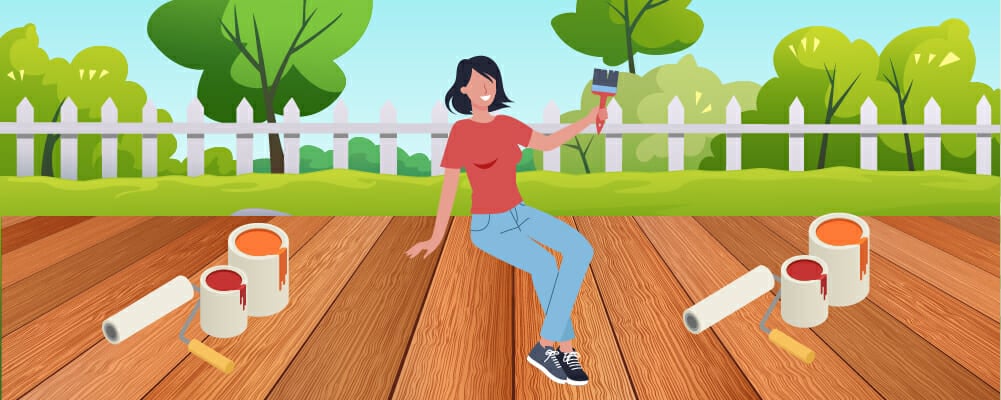
You’ve got your tools lined up and you’re ready to go. But, before you can start staining your deck, there are a few extra steps you need to take to prepare it.
These might seem like a delay in your progress, especially if you’re super keen to get started, but taking a little time to prepare your deck before applying the stain will result in a high-quality, effective finish.
Check the Weather
 This is something that a lot of people overlook, but it’s an incredibly important factor to keep in mind when you’re staining your deck.
If there’s any chance of rain, then the wood stain you’ve lovingly applied to your deck could be rinsed away, meaning that you’ll have to start all over again.
The ideal time of year for deck staining in summer.
This is because the days are generally drier and the temperature is warmer, so there’s much less risk of rain interrupting your progress.
The warmer temperatures also mean that the stain will dry much faster, so you’ll be able to get out on your newly stained deck and enjoy the sun much sooner.
But can you stain a deck during cold weather?
While this is possible, it doesn’t come without its problems. These include slower drying times, and increased risk of rain, and an uneven finish. For these reasons, we recommend only staining your deck during warmer weather.
You should aim for a day that has two warm, dry days forecast on either side of it. For example, if you were planning on staining your deck on a Saturday, then the Thursday and Friday beforehand, and the following Sunday and Monday should be dry days.
The ideal temperature for staining is anywhere between 50ºF – 90ºF.
Choose the Stain
 Before you can start staining your deck, you need to make sure that you’ve chosen the right wood stain!
This comes down to more than just choosing the best color for your deck.
You’re trying to maintain the wood and prevent it from deteriorating, so the stain needs to be up to the job!
As with tools, you have a few options available to you when choosing a deck stain.
These are solid-color wood stains, semi-solid wood stains, and semi-transparent wood stains.
Let’s take a look at each of them in a little more detail, starting with solid-color stains.
Solid-color wood stains are a popular choice for people that want to give their deck a dazzling, aesthetically pleasing appearance as well as ensuring the durability of the wood.
There are a huge variety of colors to choose from with solid-color stains, so you’re able to get really creative, and they are also great for hiding any flaws.
A solid-color wood stain will create a protective barrier on the wood which will prevent moisture from soaking in and causing rot. However, one thing to be aware of with solid-color stains is that wood doesn’t absorb them.
So, while they create a strong protective coating, they don’t strengthen the wood itself.
Your next option is semi-solid wood stains. These are also available in a variety of colors, but they have a slight transparency to them. This makes them the ideal choice for somebody that wants to stain their deck a certain color but still retain the wood’s natural grain.
As with solid-color stains, a semi-solid wood stain creates a protective coating on the wood to prevent moisture from seeping in and causing mold or mildew. They are also great at providing UV protection, so they’re an ideal choice for decks located in sunny areas.
If you’re looking to retain the natural appearance of your deck’s wood, then a semi-transparent stain would be the best choice. Unlike the solid-color and semi-solid stains, these are designed to work with the color of the wood and let it’s natural grain shine through.
Semi-transparent stains are also designed to soak into the wood and protect it from the inside out. This gives it the ability to protect itself against moisture and UV damage, and it also doesn’t create a thick coating that will get chipped away over time.
You do need to be a little careful with semi-transparent stains though, as applying the same stain on two different types of wood can create different stains. With this in mind, it’s always a good idea to go for one that matches your deck as closely as possible.
If your fencing or shed is made of different wood to your deck, you’ll need to purchase the appropriate semi-transparent stain for that wood. Do not use the same stain that you did for your deck.
Prepare the Deck
 You also need to give your deck a thorough inspection before you start applying your chosen stain.
This gives you the opportunity to tighten any loose screws or hammer any protruding nails back into place.
You can also take this opportunity to replace screws that are looking a little rusty or damaged.
This will reinforce your deck and add to its lifespan.
This is also your opportunity to check for signs of rot or insect damage before you begin staining.
If you find any, you’ll be able to treat it appropriately rather than just painting over it with wood stain, which won’t help in any way at all.
If things look really bad, you might have to replace certain boards with new wood.
Again, this is the perfect opportunity to do this.
You can also use this stage to sand down any split wood that would otherwise create splinters.
Wash the Wood
 Once you’ve made all your checks and rectified any issues, you can begin the cleaning process.
This is an essential step in staining your deck, so don’t skip over it!
If you do, then the wood stain won’t be able to create the thick protective coating or absorb into the wood nearly as effectively.
Begin by removing all of your furniture and any potted plants from your deck.
This will leave everything open so there’s no chance of missing any patches.
It also helps to keep your garden furniture protected.
As an extra precaution, we’d recommend covering it with a large plastic sheet so that any wayward drops of wood stain don’t come into contact with it.
Next, take your stiff-bristled broom and give the entire deck a thorough sweep. This will remove any loose dirt, debris, leaves, and anything else that has gathered on your deck over time. Collect your sweepings in a bucket and dispose of them accordingly.
Now, take a garden hose and soak any surrounding live vegetation. By doing this, you’ll immediately dilute any deck cleaner that comes into contact with your planting and significantly reduce the risk of them getting damaged by the chemicals.
Some deck cleaners are safe to use around vegetation, but we’d always recommend wetting your plants beforehand regardless. After all, it’s always better to be safe than sorry, and you’ll be giving your plants a nice drink!
Once you’ve done that, follow these steps to continue cleaning your deck:
- Apply your deck cleaner to your deck using a sprayer. Depending on the product you’ve chosen, it will either need to be applied to a wet or dry surface, so make sure you read the instructions. If it needs to be applied to a wet surface, give your deck a soaking at the same time as your surrounding plants.
- Take your stiff-bristled broom and work the cleaner into the wood, scrubbing with a moderate force so that it really gets into the grain and grooves.
- Allow the deck cleaner to sit for the time instructed on the packaging. This can range anywhere from 10 minutes to overnight. If it’s a longer period, make sure that nobody goes out onto the deck while the cleaner is doing its thing!
- Once the time has passed, rinse your deck thoroughly with a garden hose. If your hose is fitted with a multi-pattern spray head, choose the option with the most water pressure behind it. This will help to blast away any dirt the deck cleaner has loosened up.
You now need to let your deck dry for at least 48 hours. This is why it’s important to leave a two dry-day gap ahead of when you want to start staining your deck.
There are some deck cleaners available that will dry in a faster time, so these are worth looking out for if you’ve got a limited time frame to get everything done.
However, as with everything involved in the deck staining process, you shouldn’t try to speed the process up if at all possible. Slow and steady wins the race with deck staining, and your deck will benefit much better if you can exercise a little patience.
Stain Railings / Fences
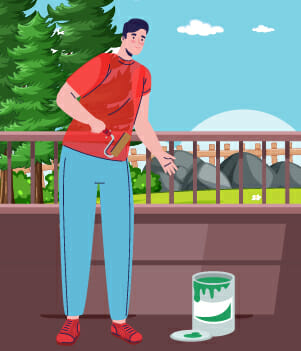 If you’re super keen to get on with staining or you’re simply looking for something to do while you wait for your deck to dry, you can always stain any railings that surround your deck.
These will be in much better shape than the main deck as they’ll have seen less use, so preparation isn’t as important.
It’s still a good idea to give them a quick brush to remove any cobwebs, but take care not to accidentally sweep them onto the already cleaned deck.
You should also use a paintbrush, as you won’t risk spraying the deck with wood stain while you wait for it to dry.
You can also use this time to stain your fences so that they match your decking.
Again, they don’t need any special cleaner applied to them beforehand as they won’t have suffered as much wear and tear as your deck.
Just sweep them with a handheld brush to remove larger debris, cobwebs, or lumps of moss.
A sprayer can be used here, but if you’re staining fence panels near your decking you should switch to a paintbrush to prevent any wood stain from hitting your deck.
How To Get The Perfect Stain

Your patience has paid off and 48 hours have passed since you rinsed the deck cleaner away. Now you can finally begin the task of staining your deck! Don’t get too overcited and dive straight in, though. There is a little bit of technique needed to get that perfect stain.
No Stain Zone
 Before you begin, you need to create a ‘no stain zone’.
This is an area where you should pile anything that you don’t want to get accidentally spattered with wood stain before covering it with a large plastic sheet or tarp.
Here’s a list of some things you might want to add to your no stain zone:
- Garden furniture
- Patio heaters
- Decorative garden ornaments
- Potted plants
- Outdoor toys
If your deck is surrounded by plants, it’s a good idea to cover that with a protective material too. This will prevent the leaves and flowers from getting stained, as well as protecting the soil they are planted in from absorbing the wood stain and feeding it to the plants.
Plastic sheeting isn’t the best material to use when you’re protecting surrounding plants as it will trap heat and moisture inside in a greenhouse-like effect, which can cause damage to delicate plants. Instead, choose a white, breathable fabric such as muslin.
This will allow the plants to breathe while reflecting sunlight away from them.
It’s also worth taping or fencing off certain areas of your garden to restrict access to your deck. This will stop excited children or pets from running across the deck while you’re staining it.
Creating a boundary with makeshift fencing will also help stop any wildlife from running across your newly stained deck during the night!
Apply Thin Coats
 You need to continue exercising patience as soon as you begin staining your deck and making sure that you’re applying the wood stain in thin coats.
Slathering it on too thick will create little pools of wood stain that will harden as unsightly bubbles.
It will also take longer to dry if you paint it on too thickly, so you’ll have to wait even longer to get outside and enjoy your deck!
We recommend painting 2-3 boards at a time from a single application.
Continue this process across the entire of your deck and you’re almost guaranteed to achieve an even coating.
It will also prevent you from overloading your brush with wood stain, which means less will be rinsed down the sink when you come to clean your equipment.
It is worth noting, however, that if you’re using a sprayer you’ll be able to get a thin coat across a wider area in more time. But you’ll need to move quite quickly to prevent an uneven coating.
Once the entire deck has been treated with a thin coat of wood stain, give your deck time to dry before deciding whether it needs another layer applied to it.
Colors can fade while they’re drying and it can take a little time to see the final results. This is a little harder to judge if you’re using a semi-transparent wood stain, so you may have to get right down and inspect as closely as you can.
If you do feel like your deck needs a second coat, follow the same process again. Apply in thin coats and allow it to dry completely before removing restricted access and placing your furniture back on the deck.
Some wood stains can take up to 48 hours to dry completely, and this is why you should leave a two dry-day period following application.
Once your stain has completely dried, you should give any surrounding vegetation a second rinse with a garden hose. This will make sure that any wood stain that was accidentally spattered while you were painting is washed away.
Then you can replace your furniture and relax on your beautiful, newly stained deck!
Back Brushing
 One thing that you need to keep an eye out for while you’re staining your deck is little pools of wood stain forming on the areas you’ve just painted.
This is one of the reasons why you should paint in thin layers, as they will harden into unsightly bubbles if left in place.
Luckily, there is an easy way to prevent this from happening and it’s a process called ‘back brushing’.
Put simply, this means smoothing over any pools of wood stain while they are still wet with your paintbrush.
This stretches them across the surface of the wood, resulting in a smooth surface and zero bubbles!
To do this, take a look at the area you’ve stained immediately after brushing and smooth out any pools of wood stain with your paintbrush.
You can speed this process up a little more by having somebody else follow you and smooth out any of these pools with their own paintbrush.
Stain Disdain? – Common Mistakes
We’ve stressed the importance of both preparation and patience when it comes to staining your deck. Following the process outlined above and making sure you have the right tools for the job will result in a flawlessly stained deck. Ignoring them will result in a stain disdain!
Below, we’ll take a look at some common mistakes that are easy to make when you’re staining a deck. We’ll also talk you through how to prevent these from happening.
Insufficient Drying Time
 Not giving your deck enough time to dry completely following staining will result in a couple of problems.
The first of these is that it won’t be able to sufficiently create the protective barrier that will keep the wood protected against moisture and UV damage.
Secondly, dragging your furniture across a deck that hasn’t completely dried yet will cause it to peel away.
It could also stick the furniture’s legs and weld it in place as it dries!
This is why you should leave a 48-hour period after you’ve finished staining your deck.
While many wood stains claim to dry within 6-8 hours, leaving this extra time guarantees you that the deck is totally safe to walk on and that there aren’t any patches still waiting to dry.
Incorrect or Low-Quality Stain
 If you’ve noticed that your deck is starting to look a little deteriorated only a few months after staining, there’s a good chance that you’ve used an incorrect or low-quality stain.
The result of which has been less protection and less longevity, meaning that you’ll have to stain it all over again much sooner than you had anticipated.
Prevention is the best cure here, which is why it’s so important to make sure you’ve chosen a high-quality wood stain.
Purchase your stain from a reputable brand, and make sure that you’ve made the right choice between solid-color stains, semi-solid stains, and semi-transparent stains.
Here’s a little refresher to help separate them from each other and make things a little clearer:
| Solid-Color Stains |
Semi-Solid Stains |
Semi-Transparent Stains |
| Creates a bold coating that hides the natural grain of the wood |
Creates a colored stain on the wood but leaves some of the natural grain visible |
Creates a semi-transparent color on the wood that leaves the natural grain visible |
| Available in a wide range of colors |
Available in a wide range of colors |
Available in a smaller range of colors, most of which are natural-looking |
| Coats the wood for protection rather than soaking into it |
Coats the wood for protection rather than soaking into it |
Absorbs into the wood to protect it from the inside out |
Rain/Water Spots
 There’s nothing worse than unsightly rain or water spots that have formed on your deck’s surface.
These are caused when water droplets mix with wet wood stain and essentially dilute it, resulting in spots that are fainter in color than the surrounding stain.
The best way to prevent this from happening is to make sure you’re staining your deck during a period of warm weather with no rain forecast for at least 5 days.
This gives you enough time to clean your deck and allow that moisture to evaporate, stain your deck, and allow it to dry completely before any rain can fall onto it and ruin the finish.
Of course, the weather is becoming increasingly unpredictable and even if you’re certain you’ve got a long period of sunshine ahead of you, the occasional rainstorm could blow over.
If you’ve applied your wood stain and rain looks imminent, it’s a good idea to suspend plastic sheeting over the top. This will catch any water and keep your deck looking perfectly stained once it’s dry.
Uneven Coverage
 Certain areas of your deck looking darker than others is the result of uneven coverage.
The best way to prevent this from happening and to keep every inch of your deck looking evenly stained is to follow the process we’ve outlined above.
If you need a reminder, here’s how to get even coverage every time:
- Apply one brush-full of wood stain across just 2 or 3 boards at a time
- As soon as you’ve finished these few boards, immediately inspect for pools of wood stain and back brush over them to blend them with the rest of the stain
- Follow this process across the entire deck
- Allow time for your stain to dry and then determine whether you need a second coat
It’s not a good idea to try and fix an uneven coverage by staining the lighter areas of your deck, especially if some time has passed since you last stained it.
This is because factors such as sunlight, rain, and foot traffic will have affected the color. So, if you were to stain around the darker patches, you might end up turning these darker patches into lighter patches of wood once the newly added stain has dried!
Conclusion – Sustain Your Stain

As you can see, staining your deck by yourself isn’t a difficult task but it does take some preparation and patience. Make sure you stick to the summer months if possible, and equip yourself with tools that will help make it a quicker, easier task.
Once you’ve achieved that perfect stain, the next step is to sustain it. This is something that you’ll have to do on an annual basis, but it’s guaranteed to keep your deck looking fantastic all year long.
More than that, yearly staining will help preserve the wood for longer and give your deck the strength it needs to survive against the elements for years to come.
So, what are you waiting for? Grab your tools, choose your wood stain, and get to work! Pretty soon you’ll be relaxing on a beautifully stained deck that you did all by yourself. You’ll also have the added joy of knowing you didn’t have to spend a fortune getting a landscaper to do it for you.


How to Modernize Your Home
/in Repairing/by G.H. Clark ContractorsThe ultimate guide to the modern features you need in your home
We’ve all heard endless complaints about the complexities of modern life. We’ll be the first to admit that we’ve found ourselves complaining about new technologies and ever-changing fashions. Sometimes it’s hard to see the benefit of modernizing when the old systems worked so well.
When it comes to our homes though, we feel a little different. We’re all for technology that will make our lives easier, improve the value of our homes, and even make them safer.
Modernizing your home doesn’t have to be all about the technology, however. Taking those lime green tiles off the bathroom wall and adding double glazing can make a huge difference.
Attempting to modernize your whole home can feel like an overwhelming task. But don’t worry, this article is going to talk you through everything you need to do to get the job done.
Table of contents
Modernizing the Home
If you’re going to modernize your home then you’re going to need a plan. While this piece is going to give you the ultimate framework to get that done. There are a few things that you need to decide for yourself.
The first two things you need to think about are, what kind of budget you’re going to set yourselves and where you are going to get your furniture and technology from.
Let’s start by talking about what kind of budget you should set yourself.
Consider Your Budget
A reasonable budget means something different to everyone. Before you decide what to set your budget at you may want to consider the following things:
Answering all these questions will give you a good idea about how much money you are prepared to spend, and how much you can afford to spend. If you want to be able to spend more money than you currently have, then you may need to save for a couple of months before starting the modernization process.
Shop Around
No matter what your budget is, you should be making smart choices about where you get your new technology and furniture from.
Buying the big name brands and most up to date hardware can quickly eat into your budget. Most of the time there is very little need to invest in these big name products. As smaller brands will often offer near identical items at a fraction of the price. You should also look into buying second hand pieces.
Here are some places to look for bargains when modernizing your home:
Create a Consistent Color Scheme and Flowing Layout
Before we start modernizing anything, you’re going to need to start thinking like an architect. There is no point spending a lot of time upgrading your home if you don’t have a plan and nothing ends up matching at the end of all the work.
Here is a quick guide to keeping your modernization consistent:
Pick your theme
This is the first thing you have to do when renovating your home in any way. This choice will influence every choice that follows it for the rest of the project.
Do your research
Many people struggle to pick a theme because they don’t actually know what they want or what they like. They don’t have enough clarity before they start the project and therefore end up with something inconsistent.
Spend some time researching different architectural styles and themes before you start upgrading. You should make the most of online resources: like Good Housekeeping, Vogue Interiors, and the 50 others on this list.
Start to make a collection of images and products that inspire you, or you want to include in your home. We will use these in the next step.
Don’t move on from this step until you are completely sure you know what you want your house to look like. It gets harder to change your mind the further forward you move.
Vision
Now, we are going to put together two vision boards based on the research you have done so far.
The first vision board will try to encapsulate how you to want to feel in your modernized home and the things you want to do there. This does not have to include exact products, you want to focus more on capturing your feelings towards the space.
Our second vision board is going to be a little more pragmatic. This vision board will include pictures of furniture and technology you want to buy. Paint samples for the walls, cuts of fabric you want to use, and even your ideal renovation time frame.
Plans
Now that you have got a really clear idea of what you want to do with your home, it’s time to get down to brass tacks. This is the point where you will want to put together a plan of action.
You should plan what upgrades you are going to do, when, and who is going to do them. If you’re changing furniture then you should know where you’re getting it from and when it is arriving. You’ll find it helpful to make a list of everything you will need to complete this job.
The good news for you is that we have arranged this article so that you can use it as the framework for your planning phase.
Upgrade Fixtures and Appliances
When trying to modernize your home, upgrading your fixtures and appliances is a great place to start.
You don’t have to replace everything in your home. However, if you upgrade a few key pieces in your home you will soon start to notice a big difference.
When picking out these key pieces you should think about the rooms and the items that you use the most. Replacing items like old TV sets and large bulky fridges are often a good investment. As they are the focus of the two rooms we tend to use the most. Swapping a VHS player and TV unit for a wall-hung flatscreen TV can transform the look of your lounge. And make your quality of life richer in the process.
Other items to consider upgrading are:
When it comes to modernizing your fixtures there are a few small swaps that will give you big results.
Firstly you should look at upgrading light switches and wall plugs. While plastic, white fittings have been in fashion for the last few decades, if you want a modern look you should try replacing them with faux chrome or copper covers.
Window fittings and light fixtures are other upgrades that you should look into. We will cover both in more detail later in the article.
Finally, items like showerheads and bathtubs should be a priority to upgrade as there is no easy way to refresh them(see next section for more details on this process).
Refresh Walls, Flooring and Countertops
Our bathrooms and the kitchen are the most expensive parts of the house to upgrade. The good news is that you don’t have to completely gut them to give the rooms a new lease of life. Simple ‘refreshment’ jobs can make a world of difference when it comes to the overall look of a room.
Here are some of the small changes you can make to your home for big, modern results.
Bathroom
The bathroom is the second most popular room when it comes to home renovation. And the second most expensive room to renovate.
There are areas of your bathroom that are worth investing in. Items like showers and bathtubs often need to be replaced to make the room feel more modern. Sadly, these are the most expensive parts of the bathroom to replace.
However, we have some simple, low budget tips that will give your bathroom a facelift and will save you a lot of money in the process.
Repaint the wooden features
Bathrooms are warm and damp the majority of the time. This leads to the wooden features in your bathroom becoming rundown over time. The humidity in the room causes the wood paint to fade and peel much faster than it would in any other room.
When you’re looking to spruce up your bathroom, start by repainting the wooden features in it. These features can include the bathroom cabinets, shelving, and windowsills. Use a light paint that compliments the color scheme of the room.
Replace these fabrics with fitted wooden/plastic shutters that match the room’s freshly painted wood. These will last for a lot longer than their fabric counterparts, are easier to clean, and stay looking chicer for longer.
Shutters
Fabric curtains and blinds are another part of our bathrooms that fall victim to the damp conditions of the room. Being constantly damp can make your curtains look drab, lackluster and they can even develop premature mold.
Glass shower curtain
On a similar note, it’s time to ditch your shower curtain. These are a bathroom accessory of the past. Not only do they look tacky, but they also need to be regularly replaced and create a large amount of excess waste. Not to mention the time wasted on cleaning them.
For a sleek, modern look that suits any bathroom theme, replace your shower curtain with a transparent sheet of glass or plastic.
Tile Paint
Our final tip could save you $1000s when it comes to bathroom renovations. We’ve all bought a new home with horrendous bathroom tiles, or woken up one day and realized that we hate the ones we put up 5 years ago.
However, a lot of us are reluctant to do anything about it because replacing tiles is a skilled job that requires hiring someone to do it for you, and tiles themselves are very expensive. Particularly, if you’re looking for high quality tiles – you really do get what you pay for.
What if we told you that you didn’t have to buy new tiles and hire someone to come and install them for you. What if we told you all you needed to give your bathroom tiles a new look was a small paintbrush.
It’s true! Purchase yourself a pot of tile paint in the color of your choice and use it to paint over your already existing tiles. Within a day your bathroom will look totally different and you won’t have to worry about anything looking wonky.
Kitchen
Now, let’s take a look at some of the simple tips you can use to modernize your kitchen on a budget.
Paint the cabinets
Replacing your cabinets in the US will cost you over $2000+ on average. On the other hand, sanding down and repairing your cabinets only costs $200-$300 on average (even less if you already have some of the materials handy.
If the price difference isn’t enough to convince you, let’s talk about how easy the process is.
The main investment you will have to make when repainting your kitchen cabinets is time. The only skill you need to complete this job is being able to use sandpaper and being able to paint.
The best news is that the end results of repairing your own cabinets are near indistinguishable from completely replacing them. This means that you can get the same results for 10% of the cost.
Upgrade faucets
If your kitchen is looking a bit old fashioned, try upgrading small elements of the room. One of these small elements you should be looking into is the faucets on your sink and the handles of your draws and cabinets.
By replacing them with modern or more classic shapes and finishes you will leave your kitchen looking a lot more modern. Even though you will have done very little work. Win-win.
Statement backsplashes
Statement backsplashes have been a trend since the early 2010s and are showing no sign of disappearing.
Why are they a great option for people on a budget?
The real selling point of backsplashes is that by nature they are small. They don’t take up a whole wall. That means if you want to buy some really high quality tiles for your backsplash, you only have to buy a small number of them.
Backsplashes give you a great opportunity to add a little splash of luxury to your kitchen.
Consider Paler, Lighter Hues & Avoid Busy Patterns
When you’re looking to modernize a room by refreshing part of it, you need to bear a few things in mind.
If in doubt, use pale colors. Modern interior designers are leaning more towards minimalist designs, reminiscent of Scandinavian styles. These styles thrive on pale, unobtrusive walls and storage areas, and let the pops of color come from art and furnishings. If you want to make your house look modern try sticking to pale colors.
Less is more in modern interior design. In the 70s and 80s patterns were everything in the world of interior design. We saw similar trends popping up throughout the very early 21st century. However, simplicity is now in fashion. Modern homes are uncluttered, sleek, and easy on the eye. If you want to make your home look more modern – avoid busy patterns.
Upgrade Windows and Doors
The windows and doors of our houses are often neglected. They feel like unchangeable parts of the house’s body, like an arm or a leg. Many people don’t think to modernize these areas of their house.
Lots of us do, however, have the option to do this. Here are three easy ways to bring your windows and doors in line with the rest of your modern house.
Add Double/Triple Glazing
Nothing makes a house feel ancient and forgotten like windows with single pane glazing. These types of windows are always drafty and often have tatty looking frames.
Opting for double, or even tripled glazed windows can instantly bring your home into the 21st century.
Paint Window Frames
Another way to instantly modernize your windows is to repaint the frames. Over time window frames start to look rundown. By treating them to a new coat of paint you can make them look brand new.
You can use the color of the window frame to dictate the theme of the room. For example, light blue window frames give off a beachy feel, whereas slate grey window frames can instantly add gravitas to a room.
Add a Sliding Door to Bring the Garden Into the Home
Finally, let’s talk about how adding new doors to your home can modernize it.
As we have mentioned above, modern interior design is heavily influenced by the work of Scandinavian designers. A big component of these designs is to make rooms feel as bright as you can during the day. If possible, natural light is the best option.
A great way to add natural lighting to your ground floor is to add a set of french doors that open directly out into your garden. This will give the room the illusion of being much larger than it actually is and flood it with natural light.
Hide Clutter
In the section on refreshing your kitchen and bathrooms, we talked about the prominence of Scandinavian design and the influence of minimalist design in modern interiors.
One of the key elements of achieving this look is to eliminate visible clutter. You don’t have to be a Marie Kondo disciple and/or minimalist to have a modern home, but it helps if you make it look like you are.
To give off this illusion of an airy and clutter free home you have to be smart with your use of storage. Hidden storage locations like shelves under your bed frame and designed cupboards will instantly leave your home feeling a lot more modern.
It is also interesting to note that we tend to be happier when we are not surrounded by visual clutter. Eliminating and carefully storing clutter could not only make your home look better but make you feel better too.
Enhance Interior Lighting
Lighting in the modern home goes above and beyond helping us see. Modern lighting is about creating or establishing a mood. We are seeing designers swap bright, white lighting for softer, warmer lights that pop up in unexpected places.
Dimmer lighting
As we mentioned, bright lighting is out and now the dimmer switch is back in fashion. We cannot say for certain what has led to this trend, but we think it’s because of the rising levels of insomnia that have been linked to overstimulation from white and blue lights.
Trust us, once you experience dimmer lighting or adjustable smart lighting you’ll sleep better and you’ll never want to go back.
LED lighting (strips, underlighting)
A major factor in the change of lighting trends is LED lighting finally hitting the mass market. Not only are LED lights incredibly energy efficient (meaning we no longer have to use the useless slow warm up bulbs), wifi-enabled, and color changing. But can be very small, so small that you can get strips of LED lights.
These strips can be placed behind TV screens, under cabinets, and behind many other types of furniture. Doing this is an excellent way to add atmosphere and dynamic lighting to your rooms.
Small, decorative lamps
We have also seen designers opting for small, decorative lamps on tables and bookshelves. These are replacing the large floor lamps that were so popular over the last two decades.
Fit these lamps with smart, LED bulbs to get all the benefits we have talked about above.
Add Updated Security System
One of the biggest developments in home technology over the last decade has been home security systems. We don’t need to hire a man to sit in a shed and watch hours and hours of footage anymore. We can now view a series of cameras with motion sensors from our phones. We can even get alerts sent to our phones when anything unexpected happens.
App Controlled
Installing an app controlled security system is an absolute necessity when modernizing your home. If you are spending all that time, effort, and money then you want to make sure that it stays safe.
App controlled security systems can offer a wide range of security features; including motion sensing doorbell cameras, to complex and high-tech complete home security systems.
Improving the Garden
The final area of your home that you can modernize is your garden. Gardening trends change a lot less frequently than interior design trends, so it is easier to keep your garden in line with modern tastes.
That being said, in the last few years, we have seen a rise in the popularity of decking, natural water features, and wild planting.
Adding Decking
Decking has always been popular, however, as we are seeing people moving away from paving over large parts of their garden, the more natural looking decking becomes a popular replacement.
When picking your wood you should think about how much maintenance you are prepared for. While lighter wood looks more modern it requires a lot more cleaning. Try to keep the natural color of your wood – this will allow it to blend more naturally with the rest of your garden.
Adding a water feature
Water features are back in fashion!
As the trend of mindfulness has grown, so has our desire to bring nature into our homes. Thanks to this we have seen the return of the water feature as people look to bring the relaxing sounds of babbling brooks into their gardens.
Adding Plants
Another modern trend is the wildlife garden. People are taking the conservation of wildlife (particularly bees and butterflies) and its habits into their own hands. Manicured gardens are a thing of the past, modern gardens are allowing nature to do its own thing and flourish naturally.
The Advantages of Modernizing Your Home
Today, we have talked about the easy ways you can modernize your home. So, now let’s take some time to talk about why you would want to modernize your home in the first place.
There are many advantages to having a more modern home. You will save money on your heating bills. You will be kind to the environment. You will find daily tasks a lot easier. You will even see an increased value of your home.
Here are the top four reasons why you should modernize your home this year.
Adds to Resale Value
Modern homes sell better. Most people want to buy houses that are done up and ready to use. If you are the kind of person who is prepared to put in the effort to modernize your home, you could see a huge profit when you come to sell it.
Modern homes make the most of clever designs and the best that technology can offer – things that really appeal to buyers. One survey showed that these types of upgrades could actually increase the value of your home by 23%.
That kind of increase definitely makes the time spent repainting the kitchen cabinets worth it.
Improve Home Functionality
Modern homes function better because they make the most of clever design features and advanced technology.
Improvements like adding double glazing or a new boiler can slash your utility bills.
A less cluttered home will make you a happier person.
Smart lighting and heating can not only save you money on your bills but can save you a lot of hassle. You can even turn on your heating at work, so your home will be warm by the time you get home.
One of our absolute favorite features of modern homes and smart lighting is not having to get out of bed to turn the lights off at night. We can do it all from our phones.
The ways smart technology and modernization can improve the functionality of your home are endless.
Increase Enjoyment and Comfortability of Home
As we mentioned above, the minimalist-leaning Scandinavian designs that inspire most modern homes have been proven to make us happier people. Less clutter means less stress. This is something we could all benefit from.
Modernizing your home gives you the opportunity to design it to your taste and lifestyle. A successful modern home is a home that works for its occupants. It can give you the opportunity to surround yourself with technology and design pieces that make you feel more comfortable in your own home.
Secure Any Safety Issues
Finally, modernizing your home can open you up to a whole new world of security features and software.
The real highlights are state of the art security systems that allow you to know what is going on in your home, even when you aren’t there. With a front door camera running via wifi that will allow you to see who is ringing your doorbell from your desk at work. Or motion trigger cameras that allow you to keep an eye on your pets when they are alone.
With modern security cameras and technology, it is easier than ever to protect our homes and families.
Summary
If you’re looking to add value to your home, or you just want to make your life a little easier – then you should consider modernizing your home.
Not only can it add to the value of your home but it can keep you warmer, make you happier, and slash your utility bills.
Modernizing your home can seem like an overwhelming task. However, with this guide, you will be able to do it hassle-free. Our guide will take you through the areas to spend and the areas to save. It will take you through which details you should pay attention to, and the small changes that will make the biggest difference.
This article will help you modernize your home from top to bottom, and even out into the garden. So, it’s time to get out your paintbrush and improve your home.
[/et_pb_text][/et_pb_column][/et_pb_row][/et_pb_section]DIY Decking: How To Stain Your Own Deck
/in Decks/by G.H. Clark ContractorsDecking is becoming an increasingly popular choice in gardens all over the world. The beautiful, natural grains of different woods can compliment planting schemes and the structure of decking brings some real architectural interest to your outdoor space.
To keep your decking looking beautiful all year round, however, you will need to stain it from time to time. This doesn’t only maintain its aesthetic appearance, but also keeps the wood in great condition and ensures it remains safe and solid for years to come.
Contrary to popular belief, there is a little more to staining a deck than simply painting it with wood stain. Preparation, technique, and stain choice all go toward keeping your deck well maintained. Get any of these aspects wrong and you could be headed towards decking-disaster!
Where do you even begin when it comes to staining a deck, though? Sure, you could hire a professional landscaping company to come out and do it for you. But a much cheaper alternative is to do it yourself.
Don’t panic! It’s actually a relatively easy task to undertake and, if done correctly, will not only keep your deck in fantastic condition but will save you a ton of money along the way.
To help make things easier, we’ve put together this ultimate guide on how to stain your own deck. Here you’ll learn everything you need to know to stain your deck yourself, what tools you’ll need, and we’ve even put together some useful tips to help make things even easier.
So, keep reading and pretty soon you’ll be relaxing on your deck while admiring the beautiful stain that you single-handedly applied.
Introduction – Why Stain Your Decking?
Before we get into how to start staining your deck, let’s take a look at why it’s so important to stain your deck. Throughout the year, a deck is exposed to all kinds of extreme weather. From blazing hot sunshine to torrential downpours of rain, your deck is under constant attack.
This can affect the quality of the wood and can cause warping or splitting. Treating your deck with wood stain, however, significantly reduces the chances of this happening.
Your deck also has to withstand everything that you and your family put it through all year round. If you have a deck, you more than likely spend a lot of time out on it during the summer months.
This leads to increased foot traffic scuffing the existing stain, or the occasional spilled glass of wine or condiment dropped during an alfresco grilling session creating an off-color spot on the wood.
Neglecting your decking and allowing natural and human forces to wear away at it over time will cause significant damage in a few ways. The first of these is that the wood will begin to erode at uneven levels, meaning that your deck becomes an unsafe, unstable surface to walk on.
As the wood wears down, the nails and fixtures that were used to put it together will become exposed as well. Stepping on one of these can cause a nasty injury, and it could also create splinters that will do some real damage to the delicate paws of any pets that run across your deck.
Not treating your deck also makes it look neglected and unloved, completely taking away it’s aesthetic appeal and making it a less than desirable place to sit outside and enjoy the warm weather.
Another reason to keep your deck well maintained is that it can add value to your property. So, if you’re thinking of selling your home any time soon (or even further into the future) and you have a deck in your garden, staining it is an essential part of your annual DIY task-list.
Benefits of Staining Your Deck
But what are the benefits of staining your deck? And how exactly does wood stain prevent any of the above issues from occurring?
The first thing that applying a thorough coating of wood stain to your deck will do is prevent it from rotting.
Wood rot can develop in a variety of ways but the most common causes are mold and mildew caused by a mixture of exposure to wet and warm weather.
Staining a deck helps keep moisture locked out of the wood and also prevents it from suffering from any sun damage.
Think of it like a protective sheet that you’ve laid all over your deck.
Rain is kept off and the wood is kept dry, while the sun is unable to cause any UVA damage that leads to warping or cracking.
While preventing rotting is the main benefit that comes from staining your deck, there are a few other things that regular staining can help prevent. These include the following:
Termites are another culprit responsible for deck-deterioration and, again, treating your deck with wood stain can help to prevent these little pests from causing total obliteration. There are even specialized wood stains that are designed specifically to deter termites.
Difficulty Level
However, depending on the size of your deck, it can be a time-consuming process, so you need to make sure that you’ve got enough of a gap in your schedule to do it properly.
If you’ve got a small deck, then you may find you’re able to do the job in only a few hours.
If your deck covers a wide expanse of space in your garden, then it will take you much longer and you may need to dedicate an entire weekend to the task.
Regardless of size, you need to remember to take your time to do it properly.
A rushed job will only result in ineffectiveness, and you’ll find yourself having to re-stain your deck much sooner than you would if you allocated enough time to the job the first time around.
Equipment You’ll Need
This will allow you to do the job properly and make things much easier.
Below, we’ll take a look at all the tools you need when it comes to staining a deck.
We’ll also explain a little more about which tools suit certain needs the best, making it easier for you to find the right choice for your deck.
Materials
There are a few materials that you might not realize you need for staining a deck.
And, depending on the time of year you’re carrying out the task, each is useful in its own way.
Plastic sheeting is one of the best materials you can use for staining a deck, and it has a couple of uses. The first of these is to keep any furniture that you’ve removed from your decking protected from potential stain-splatters that come from your paintbrush.
Another reason that plastic sheeting is a useful material is that it can be laid across your deck a couple of days before you start staining to keep it dry. This means that if there is a sudden downpour of rain, the wood won’t get wet and you won’t have to delay the job.
You’ll also need to give your deck a thorough clean before you start painting, and one of the best ways to do this is with a deck cleaning solution. Applying this a couple of days before you lay your plastic sheeting down will help loosen up any ingrained dirt or algae.
You can then brush this away or blast it with a power washer, and the wood will absorb the stain much more effectively.
When you’re applying deck cleaner and wood stain, it’s also a good idea to wear rubber gloves. This will help to keep your hands protected from any potentially harmful chemicals that your skin could react to.
You’ll also reduce the risk of staining your hands while you paint your deck, so you won’t have to deal with the nightmare of trying to scrub them clean when you’re done!
Wearing a protective face mask is also beneficial when you’re staining your deck, as it will prevent you from breathing in any fumes coming from the wood stain or deck cleaner.
Tools
The most important tool you’ll need for staining your deck is a paintbrush or sprayer. You’ve got a few options available to choose from here, and each is designed to make staining quicker and easier. Let’s take a look at the three most common types of brush and sprayer used for staining.
The first is a standard, soft-bristled brush. This is the ideal tool if the wood on your deck features grooves as it will allow you to get right down into them with the wood stain. It also makes getting into sharp corners or painting any railings much easier.
Your second choice is a stain pad. This works very quickly and takes a lot of the backbreaking work out of the brushing motion as it glides smoothly across the surface of your deck. It’s also good for getting stain right into corners, but it’s not as effective as a soft-bristled brush on grooved-wood.
Finally, you might choose to stain your deck using a sprayer. This is the fastest way of applying stain and works a lot like a garden sprayer. Fill the reservoir with your chosen wood stain, pull the trigger, and point it directly at the wood.
A sprayer is a good choice for anybody with a really large deck as you’ll be able to cover a larger area in a shorter space of time. However, it can create a bit of a mess if it’s not operated with care, so you’ll need to keep your surroundings protected with plastic sheeting.
You can also use a roller if you’d like to cover a wider area of decking in a quicker time, but it is a little more difficult to get into the grooves and crevices.
There are few extra tools that can make staining your deck and preparing it for staining much easier too. These include the following:
You should also keep a screwdriver close to hand. This will help you re-secure any loose screws back in place when you perform your pre-staining checks, as well as replacing any damaged screws you might come across while you’re staining.
It’s worth making sure you have both a Philip’s (crosshead) screwdriver and a flat-head screwdriver in your tool kit. This way you won’t be restricted by the type of screws you can use to replace damaged ones.
A hammer is a useful tool here as well and will make it easier to free stubborn or rusted-in nails.
All Hands On Deck: Preparation
You’ve got your tools lined up and you’re ready to go. But, before you can start staining your deck, there are a few extra steps you need to take to prepare it.
These might seem like a delay in your progress, especially if you’re super keen to get started, but taking a little time to prepare your deck before applying the stain will result in a high-quality, effective finish.
Check the Weather
If there’s any chance of rain, then the wood stain you’ve lovingly applied to your deck could be rinsed away, meaning that you’ll have to start all over again.
The ideal time of year for deck staining in summer.
This is because the days are generally drier and the temperature is warmer, so there’s much less risk of rain interrupting your progress.
The warmer temperatures also mean that the stain will dry much faster, so you’ll be able to get out on your newly stained deck and enjoy the sun much sooner.
But can you stain a deck during cold weather?
While this is possible, it doesn’t come without its problems. These include slower drying times, and increased risk of rain, and an uneven finish. For these reasons, we recommend only staining your deck during warmer weather.
You should aim for a day that has two warm, dry days forecast on either side of it. For example, if you were planning on staining your deck on a Saturday, then the Thursday and Friday beforehand, and the following Sunday and Monday should be dry days.
The ideal temperature for staining is anywhere between 50ºF – 90ºF.
Choose the Stain
This comes down to more than just choosing the best color for your deck.
You’re trying to maintain the wood and prevent it from deteriorating, so the stain needs to be up to the job!
As with tools, you have a few options available to you when choosing a deck stain.
These are solid-color wood stains, semi-solid wood stains, and semi-transparent wood stains.
Let’s take a look at each of them in a little more detail, starting with solid-color stains.
Solid-color wood stains are a popular choice for people that want to give their deck a dazzling, aesthetically pleasing appearance as well as ensuring the durability of the wood.
There are a huge variety of colors to choose from with solid-color stains, so you’re able to get really creative, and they are also great for hiding any flaws.
A solid-color wood stain will create a protective barrier on the wood which will prevent moisture from soaking in and causing rot. However, one thing to be aware of with solid-color stains is that wood doesn’t absorb them.
So, while they create a strong protective coating, they don’t strengthen the wood itself.
Your next option is semi-solid wood stains. These are also available in a variety of colors, but they have a slight transparency to them. This makes them the ideal choice for somebody that wants to stain their deck a certain color but still retain the wood’s natural grain.
As with solid-color stains, a semi-solid wood stain creates a protective coating on the wood to prevent moisture from seeping in and causing mold or mildew. They are also great at providing UV protection, so they’re an ideal choice for decks located in sunny areas.
If you’re looking to retain the natural appearance of your deck’s wood, then a semi-transparent stain would be the best choice. Unlike the solid-color and semi-solid stains, these are designed to work with the color of the wood and let it’s natural grain shine through.
Semi-transparent stains are also designed to soak into the wood and protect it from the inside out. This gives it the ability to protect itself against moisture and UV damage, and it also doesn’t create a thick coating that will get chipped away over time.
You do need to be a little careful with semi-transparent stains though, as applying the same stain on two different types of wood can create different stains. With this in mind, it’s always a good idea to go for one that matches your deck as closely as possible.
If your fencing or shed is made of different wood to your deck, you’ll need to purchase the appropriate semi-transparent stain for that wood. Do not use the same stain that you did for your deck.
Prepare the Deck
This gives you the opportunity to tighten any loose screws or hammer any protruding nails back into place.
You can also take this opportunity to replace screws that are looking a little rusty or damaged.
This will reinforce your deck and add to its lifespan.
This is also your opportunity to check for signs of rot or insect damage before you begin staining.
If you find any, you’ll be able to treat it appropriately rather than just painting over it with wood stain, which won’t help in any way at all.
If things look really bad, you might have to replace certain boards with new wood.
Again, this is the perfect opportunity to do this.
You can also use this stage to sand down any split wood that would otherwise create splinters.
Wash the Wood
This is an essential step in staining your deck, so don’t skip over it!
If you do, then the wood stain won’t be able to create the thick protective coating or absorb into the wood nearly as effectively.
Begin by removing all of your furniture and any potted plants from your deck.
This will leave everything open so there’s no chance of missing any patches.
It also helps to keep your garden furniture protected.
As an extra precaution, we’d recommend covering it with a large plastic sheet so that any wayward drops of wood stain don’t come into contact with it.
Next, take your stiff-bristled broom and give the entire deck a thorough sweep. This will remove any loose dirt, debris, leaves, and anything else that has gathered on your deck over time. Collect your sweepings in a bucket and dispose of them accordingly.
Now, take a garden hose and soak any surrounding live vegetation. By doing this, you’ll immediately dilute any deck cleaner that comes into contact with your planting and significantly reduce the risk of them getting damaged by the chemicals.
Some deck cleaners are safe to use around vegetation, but we’d always recommend wetting your plants beforehand regardless. After all, it’s always better to be safe than sorry, and you’ll be giving your plants a nice drink!
Once you’ve done that, follow these steps to continue cleaning your deck:
You now need to let your deck dry for at least 48 hours. This is why it’s important to leave a two dry-day gap ahead of when you want to start staining your deck.
There are some deck cleaners available that will dry in a faster time, so these are worth looking out for if you’ve got a limited time frame to get everything done.
However, as with everything involved in the deck staining process, you shouldn’t try to speed the process up if at all possible. Slow and steady wins the race with deck staining, and your deck will benefit much better if you can exercise a little patience.
Stain Railings / Fences
These will be in much better shape than the main deck as they’ll have seen less use, so preparation isn’t as important.
It’s still a good idea to give them a quick brush to remove any cobwebs, but take care not to accidentally sweep them onto the already cleaned deck.
You should also use a paintbrush, as you won’t risk spraying the deck with wood stain while you wait for it to dry.
You can also use this time to stain your fences so that they match your decking.
Again, they don’t need any special cleaner applied to them beforehand as they won’t have suffered as much wear and tear as your deck.
Just sweep them with a handheld brush to remove larger debris, cobwebs, or lumps of moss.
A sprayer can be used here, but if you’re staining fence panels near your decking you should switch to a paintbrush to prevent any wood stain from hitting your deck.
How To Get The Perfect Stain
Your patience has paid off and 48 hours have passed since you rinsed the deck cleaner away. Now you can finally begin the task of staining your deck! Don’t get too overcited and dive straight in, though. There is a little bit of technique needed to get that perfect stain.
No Stain Zone
This is an area where you should pile anything that you don’t want to get accidentally spattered with wood stain before covering it with a large plastic sheet or tarp.
Here’s a list of some things you might want to add to your no stain zone:
If your deck is surrounded by plants, it’s a good idea to cover that with a protective material too. This will prevent the leaves and flowers from getting stained, as well as protecting the soil they are planted in from absorbing the wood stain and feeding it to the plants.
Plastic sheeting isn’t the best material to use when you’re protecting surrounding plants as it will trap heat and moisture inside in a greenhouse-like effect, which can cause damage to delicate plants. Instead, choose a white, breathable fabric such as muslin.
This will allow the plants to breathe while reflecting sunlight away from them.
It’s also worth taping or fencing off certain areas of your garden to restrict access to your deck. This will stop excited children or pets from running across the deck while you’re staining it.
Creating a boundary with makeshift fencing will also help stop any wildlife from running across your newly stained deck during the night!
Apply Thin Coats
Slathering it on too thick will create little pools of wood stain that will harden as unsightly bubbles.
It will also take longer to dry if you paint it on too thickly, so you’ll have to wait even longer to get outside and enjoy your deck!
We recommend painting 2-3 boards at a time from a single application.
Continue this process across the entire of your deck and you’re almost guaranteed to achieve an even coating.
It will also prevent you from overloading your brush with wood stain, which means less will be rinsed down the sink when you come to clean your equipment.
It is worth noting, however, that if you’re using a sprayer you’ll be able to get a thin coat across a wider area in more time. But you’ll need to move quite quickly to prevent an uneven coating.
Once the entire deck has been treated with a thin coat of wood stain, give your deck time to dry before deciding whether it needs another layer applied to it.
Colors can fade while they’re drying and it can take a little time to see the final results. This is a little harder to judge if you’re using a semi-transparent wood stain, so you may have to get right down and inspect as closely as you can.
If you do feel like your deck needs a second coat, follow the same process again. Apply in thin coats and allow it to dry completely before removing restricted access and placing your furniture back on the deck.
Some wood stains can take up to 48 hours to dry completely, and this is why you should leave a two dry-day period following application.
Once your stain has completely dried, you should give any surrounding vegetation a second rinse with a garden hose. This will make sure that any wood stain that was accidentally spattered while you were painting is washed away.
Then you can replace your furniture and relax on your beautiful, newly stained deck!
Back Brushing
This is one of the reasons why you should paint in thin layers, as they will harden into unsightly bubbles if left in place.
Luckily, there is an easy way to prevent this from happening and it’s a process called ‘back brushing’.
Put simply, this means smoothing over any pools of wood stain while they are still wet with your paintbrush.
This stretches them across the surface of the wood, resulting in a smooth surface and zero bubbles!
To do this, take a look at the area you’ve stained immediately after brushing and smooth out any pools of wood stain with your paintbrush.
You can speed this process up a little more by having somebody else follow you and smooth out any of these pools with their own paintbrush.
Stain Disdain? – Common Mistakes
We’ve stressed the importance of both preparation and patience when it comes to staining your deck. Following the process outlined above and making sure you have the right tools for the job will result in a flawlessly stained deck. Ignoring them will result in a stain disdain!
Below, we’ll take a look at some common mistakes that are easy to make when you’re staining a deck. We’ll also talk you through how to prevent these from happening.
Insufficient Drying Time
The first of these is that it won’t be able to sufficiently create the protective barrier that will keep the wood protected against moisture and UV damage.
Secondly, dragging your furniture across a deck that hasn’t completely dried yet will cause it to peel away.
It could also stick the furniture’s legs and weld it in place as it dries!
This is why you should leave a 48-hour period after you’ve finished staining your deck.
While many wood stains claim to dry within 6-8 hours, leaving this extra time guarantees you that the deck is totally safe to walk on and that there aren’t any patches still waiting to dry.
Incorrect or Low-Quality Stain
The result of which has been less protection and less longevity, meaning that you’ll have to stain it all over again much sooner than you had anticipated.
Prevention is the best cure here, which is why it’s so important to make sure you’ve chosen a high-quality wood stain.
Purchase your stain from a reputable brand, and make sure that you’ve made the right choice between solid-color stains, semi-solid stains, and semi-transparent stains.
Here’s a little refresher to help separate them from each other and make things a little clearer:
Rain/Water Spots
These are caused when water droplets mix with wet wood stain and essentially dilute it, resulting in spots that are fainter in color than the surrounding stain.
The best way to prevent this from happening is to make sure you’re staining your deck during a period of warm weather with no rain forecast for at least 5 days.
This gives you enough time to clean your deck and allow that moisture to evaporate, stain your deck, and allow it to dry completely before any rain can fall onto it and ruin the finish.
Of course, the weather is becoming increasingly unpredictable and even if you’re certain you’ve got a long period of sunshine ahead of you, the occasional rainstorm could blow over.
If you’ve applied your wood stain and rain looks imminent, it’s a good idea to suspend plastic sheeting over the top. This will catch any water and keep your deck looking perfectly stained once it’s dry.
Uneven Coverage
The best way to prevent this from happening and to keep every inch of your deck looking evenly stained is to follow the process we’ve outlined above.
If you need a reminder, here’s how to get even coverage every time:
It’s not a good idea to try and fix an uneven coverage by staining the lighter areas of your deck, especially if some time has passed since you last stained it.
This is because factors such as sunlight, rain, and foot traffic will have affected the color. So, if you were to stain around the darker patches, you might end up turning these darker patches into lighter patches of wood once the newly added stain has dried!
Conclusion – Sustain Your Stain
As you can see, staining your deck by yourself isn’t a difficult task but it does take some preparation and patience. Make sure you stick to the summer months if possible, and equip yourself with tools that will help make it a quicker, easier task.
Once you’ve achieved that perfect stain, the next step is to sustain it. This is something that you’ll have to do on an annual basis, but it’s guaranteed to keep your deck looking fantastic all year long.
More than that, yearly staining will help preserve the wood for longer and give your deck the strength it needs to survive against the elements for years to come.
So, what are you waiting for? Grab your tools, choose your wood stain, and get to work! Pretty soon you’ll be relaxing on a beautifully stained deck that you did all by yourself. You’ll also have the added joy of knowing you didn’t have to spend a fortune getting a landscaper to do it for you.
The Everyman’s Guide To Repairing Any Roof From Beginning To End
/in Roofing/by G.H. Clark ContractorsIf your shield is broken – if your roof is not in tip-top condition – nothing in your house is as safe as you think it is. Fall rains? Winter snows? Flying and crawling insects, looking for somewhere to hide, to nest, and to call home? Birds, even, finding themselves a sheltered indoor space to hatch their eggs, to eat, and to leave their waste behind. Without a well-maintained roof, everything else in your house is on borrowed time.
Why Would You Need To Repair Your Roof?
Almost anything can damage your roof and make it lose its integrity. The list of potential sources of roof-damage can seem daunting, but don’t panic – there are solutions to them all, and we’ll cover them here. But you have to know what the problems could be before the solutions make any sense. So here’s just a whirlwind (or on land a tornado) tour of some of the things that can mess with your roof. Oh, and yes – whirlwinds and/or tornadoes are definitely roof-damagers, though if they hit, chances are the roof will be the least of your repair worries.
Wind
High winds have a way of getting under your roof tiles, shingles or other coverings and acting like a lever, prizing them free and opening up weak spots in your roof’s defences. You know the saying: you’re only as good as your weakest link. Strong winds can give you a weak link in your roof’s weather defences. And as if that’s not annoying enough, once there is a weak link or gap, it works like tooth decay – wind and anything else has a greater likelihood of loosening or attacking surrounding slates or shingles. Once you have a weak spot, you’re going to have to act fast to stop the rot.
Rain
Rain is a classic enemy of roofs. Seems harmless. Seems the very thing your roof is there to protect you from.
Get enough rain and heavy winds together though and what you have is a recipe for erosion. Erosion at cements, tars, sealants, you name it rain will weaken it, given enough time and persistence. Never underestimate the power of rain to damage your roof – it’s the bird that sharpens its beak on the mountain. Leave it to do its thing for long enough, and you have no more mountain. Likewise, if you don’t check your roof after really heavy downpours, you’re practically putting a neon sign on the roof, saying “That’s OK, dryness and security are overrated.”
Snow And Ice
Where rain and wind do damage by attrition and erosion, snow and ice are rather more heavyweight in their action. Snow that settles heavily on a roof can be a risk to roof tiles and shingles if too much snow accumulates, as it can then cause a mini-avalanche – and take tiles with it. Ice works on a different level, chilling down any latent moisture in the surface of the roof. The chilling to ice has an odd but technical expansion effect, meaning anywhere that was just wet can be forced open, forced to crack, or even forced in two. All of which is potentially bad news for your poor roof.
Sunshine
Sometimes, it feels like your roof just can’t win. If it’s not under attack from the insidious, gap-finding, hole-enlarging, tile-loosening rain, it’s snow, putting it under undue pressure. And if it’s not the snow, it’s the sun.
Wait, what damage can the sun do, right? It’s 96 million miles away, it’s going to send energy all the way to Earth just to mess with your roof?
It’s not personal, it’s strictly business. Ultraviolet light coming from the sun has no vendetta against your roof or your house, but nevertheless, its nature is such that it can cause the materials in your roof to heat up during ultra-hot days. Then, at night, when the cool down comes, the contraction that mirrors the expansion in the heat can crack your roof like a spoon through eggshell.
If you have a flat roof, it can also cause a condition called ‘alligatoring’ – the same stretch and contraction action leaving your flat roof with the texture of alligator hide – complete with weak spots. Leave it to its own devices for too long and what you have is a chronically compromised roof.
Sunshine as a type of weather is usually equated to happiness, but if your UV protection isn’t up to its job, sunny days can be smiling assassins for your roof.
Moss
What now? That fuzzy green stuff that can give a lovely lived-in look to your property? That’s a danger to your roof somehow?
You’d better believe it. Moss may look pretty in certain circumstances, it’s soft to the touch, which means it absorbs water more or less like a sponge. A sponge which, under the right circumstances, doubles as a water balloon, creating small but powerful water bursts to add to any existing water damage.
The thing you have in your favour with moss is that it’s the sloth of the plant world. It’s non-vascular and non-flowering, which means the energy it has to do anything at all other than be alive and mess with your roof is very small. So, like annoying coughs and rumors, deal with moss early and it will never gain the size or momentum to damage your roof.
Yes. Yes, we’re recommending you get regularly on ladders and scrub moss off your roof. Before the big green carpet of roof-death explodes and takes your house with it.*
*Moss may not actually explode. Sequences may have been dramatized for effect. It can still damage your roof though, honest.
Algae
Seriously?
Yep, seriously. Blue-green algae, the most common form found on roofs, is mostly an unsightly thing while it’s alive.
When it dies, and unless you get rid of it, it creates patches of darkness on your roof.
So what, right?
So those dark patches make your UV reflection less effective, which means…you read the thing about the sun, yes? Giant sky-ball of roof-killing UV beams? Think of algae as the guard the sun pays off to break into your castle.
While we’re here, let’s talk about roof-mold. Go on, you know you want us to.
Mold is more the result of pre-existing roof problems. At least, it is in the beginning. But when it gets in, this moisture problem is the herald of decay. It can slime its rancid, noxious, potentially dangerous way through any and all wood it comes into contact with. It will seep and slime on down from exposed or vulnerable roof beams into every room unless it’s stopped.
Mold is one of the many insidious things that can damage the framing of your roof, rather than just the outside coverings.
Trees
Yes, we know – we love trees too, in their own place. Trees overhanging your roof are not in their right place, because wind, rot, lightning, even sometimes simple gravity can snap a branch off and send it hurtling through your roof at an alarming speed and leave you with a hefty repair bill – or a hefty repair job.
You’re getting the picture, aren’t you? It’s absolutely a privilege to have your own room, but like all privileges, a roof also comes with responsibilities. Each issue we’ve mentioned can be fixed – but whether you call a professional roofer in to repair your roof for you, or whether you do it yourself is a matter between you, your toolbox and your bank balance.
Let us help you out with that decision.
How Much Does Roof Repair Cost?
Ever wondered what it would cost to totally re-cover your roof? How much are we talking about for materials and professional labor.
Complete Replacement Cost
Figures will vary of course, depending on the size of your roof, but these are fairly typical costs for different roofing options:
This is why we argue for remedial roof repair, piece by piece, tile by tile, rather than putting it off until there’s a big enough problem to require a whole new roof. Even if you’re only talking three-tab asphalt shingle, nobody wants to suddenly face a bill for $7,000 for materials.
Professional roofers though are surprisingly reasonable for their time and the potential hassle they take out of your life.
The national average cost for a roof repair is around $900 (with highs and lows between $300-$1,500). Again, the average costs reflect the wisdom of dealing with roof repairs as and when they’re first noticed, rather than waiting until there’s more to do.
If you’re replacing a full asphalt roof on a typical 2,000 sq. ft. single story ranch house, with materials and labor, you’re looking at between $8,500-$16,500 fully installed. The larger your property and the more complex the roof, not to mention the more expensive the roofing material of course, the more you’ll pay.
If you know what you’re doing, that’s a solid incentive to try and fix your roof yourself, though it’s obviously less daunting to fix small problems as they arise than it would be to fix or replace a whole roof by yourself. There’s also the matter of time – on your own, you’re more at the mercy of daylight and seasonal safety, and you’re in a race with the potential issues of all those sorts of weather we mentioned. Which brings us to another question.
When Should You Repair Your Roof?
It probably doesn’t take a genius to work out that some times are better than others for roof repair. Nobody wants to be repairing a roof in howling gale force winds, a torrential downpour or an incoming blizzard. Sure, there might be an extra satisfaction in battling against the odds and getting it done.
But the negative experience of actually having to be up on a roof, making adjustments and repairs, in unremittingly unpleasant weather is quite enough to make most people huddle indoors with a hot chocolate. The same is true whether you fix your roof yourself, or get professionals in. Sure, they’d love to take the money for fixing your roof in extremis – but you may well need to pay a consideration for their greater danger while they do it.
You might think it would be natural then for summer to be the best time of year to tackle your roof repair. The truth of that depends where you live. In some parts of the US, high summer is as dangerous a time as midwinter to be up on a roof, relentless glaring heat being less fun than you might imagine.
For most of the continental US though, late spring through summer to early fall is optimum roof repair time. If nothing else, they’re the months when you can be most certain that your roof having gaps in it, or even being completely absent, won’t leave you open to sudden rainstorms and snowstorms.
Nobody wants to take a roof off only to have the rains come down – it’s a soulcrusher, not to mention a roof-ruiner and a potentially doubled expense.
So, late spring, all summer and early fall give you the best chance of successfully fixing your roof.
That said, this is a reckoner that depends on there being a large amount of work to do. If you have a few tiles or slates or shingles blow off in late fall, don’t wait till the spring sunshine before you tackle it – every day of bad weather between the first and the fix will do more damage to the roof covering, and potentially the timbers and rooms underneath.
That’s perhaps one of the most important differences between doing it yourself and getting a professional roofer out to do the work for you. Professional roofers will come during the off-season, they’ll come perfectly equipped, and they’ll come with far more perfect knowledge than even we can give you about how to effect the repair. So unless you’re very sure of yourself, if you get roof damage in the off-season, it may well be in everyone’s best interests for you to call a professional roofer in.
Also, consider that speed factor again. If you call professionals in during the off-season, the likelihood is that there will be whole teams available, due to the relatively slim pickings for business in that season. Two or three professional roofers working on a job will get it done far faster than you alone will be able to do. The faster the job is done, the less damage the initial issue will cause, and the less remedial work you’ll be called on to do as the year rolls around.
When looking at roof repair of course, you might as well be a zookeeper, tasked with feeding the animals in a zoo. How you repair a roof will depend entirely on what roof you have, just as feeding the animals in a zoo (or at least, doing it correctly without getting your hand bitten off) depends on understanding what each animal eats.
Let’s take a look at the different kinds of roofing materials in common use across the US.
A Material World: A Word On Roof Materials
The thing about your choice of roofing material is that sometimes it…isn’t…your choice. Or not wholly your choice, at any rate.
Geography counts for something in roof-choices – if every house around you has one style and you decide to go completely against that grain, there may be city ordinances you’ll run into. If the nature of the area calls for a classic Spanish look, and you try to go with an ultra-modern vibe, you may not be allowed to go for the roof of your choice. There may also be practical concerns – roofs might all look the same in certain areas due to the presence of common hazards – fire-retardation might be must-have in some areas, for instance. The pitch of your roof angle will affect which coverings you can use too. Wood shake shingles, for example, are good on steeper roofs, but get you nowhere if you have a lower-pitched, flatter roof.
With all that said, you can probably find your roofing material somewhere in this list:
Asphalt composition shingles
These are your entry-level roof coverings – unfussy and inexpensive.
Available most everywhere, they’re probably the most recognizable kind of roof covering, because they often come as standard on new houses to keep the build and sale price low, and you frequently have to actively dislike them with a passion to make them worth the expense and hassle of replacing entirely.
[/et_pb_text][/et_pb_column][et_pb_column type=”2_5″ _builder_version=”4.16″ _module_preset=”default” global_colors_info=”{}” theme_builder_area=”post_content”][et_pb_image src=”https://www.ghclark.com/wp-content/uploads/07-300×200-1.jpg” title_text=”07-300×200″ _builder_version=”4.16″ _module_preset=”default” custom_margin=”35px||||false|false” custom_margin_tablet=”0px||||false|false” custom_margin_phone=”” custom_margin_last_edited=”on|desktop” global_colors_info=”{}” theme_builder_area=”post_content”][/et_pb_image][/et_pb_column][/et_pb_row][et_pb_row column_structure=”3_5,2_5″ use_custom_gutter=”on” gutter_width=”2″ _builder_version=”4.16″ _module_preset=”default” width=”100%” custom_padding=”||3px|||” global_colors_info=”{}” theme_builder_area=”post_content”][et_pb_column type=”3_5″ _builder_version=”4.16″ _module_preset=”default” global_colors_info=”{}” theme_builder_area=”post_content”][et_pb_text _builder_version=”4.16″ _module_preset=”default” global_colors_info=”{}” theme_builder_area=”post_content”]Wood shakes or shingles
On the other end of the spectrum, you’ll pay handsomely for wood shingles, but they’ll give an unusual, classic look to your roof. They’re perhaps surprisingly durable in most weather conditions. Fire danger areas though – nnnnnot so great. With the whole…made of wood…thing.
[/et_pb_text][/et_pb_column][et_pb_column type=”2_5″ _builder_version=”4.16″ _module_preset=”default” global_colors_info=”{}” theme_builder_area=”post_content”][et_pb_image src=”https://www.ghclark.com/wp-content/uploads/08-300×200-1.jpg” title_text=”08-300×200″ _builder_version=”4.16″ _module_preset=”default” custom_margin=”||||false|false” custom_margin_tablet=”0px||||false|false” custom_margin_phone=”” custom_margin_last_edited=”on|desktop” global_colors_info=”{}” theme_builder_area=”post_content”][/et_pb_image][/et_pb_column][/et_pb_row][et_pb_row column_structure=”3_5,2_5″ use_custom_gutter=”on” gutter_width=”2″ _builder_version=”4.16″ _module_preset=”default” width=”100%” custom_padding=”||0px|||” global_colors_info=”{}” theme_builder_area=”post_content”][et_pb_column type=”3_5″ _builder_version=”4.16″ _module_preset=”default” global_colors_info=”{}” theme_builder_area=”post_content”][et_pb_text _builder_version=”4.16″ _module_preset=”default” global_colors_info=”{}” theme_builder_area=”post_content”]Metal roofs
For the longest time, metal roofs existed in two extremes – urban farm housing, and commercial buildings. Then they caught on in high-end, architecturally-designed homes, giving them a certain gunmetal chic.
But metal roofs have come on a lot in the last decade, in style, accessibility and popularity. Fireproof, durable and now stylish too, they’re a viable option for your home. What they’re not however is either easy or cheap. They need specialty contractors to put them on, and the chances are, they’ll need specialty contractors to repair them too.
[/et_pb_text][/et_pb_column][et_pb_column type=”2_5″ _builder_version=”4.16″ _module_preset=”default” global_colors_info=”{}” theme_builder_area=”post_content”][et_pb_image src=”https://www.ghclark.com/wp-content/uploads/09-300×200-1.jpg” title_text=”09-300×200″ _builder_version=”4.16″ _module_preset=”default” custom_margin=”40px||||false|false” custom_margin_tablet=”0px||||false|false” custom_margin_phone=”” custom_margin_last_edited=”on|desktop” global_colors_info=”{}” theme_builder_area=”post_content”][/et_pb_image][/et_pb_column][/et_pb_row][et_pb_row use_custom_gutter=”on” gutter_width=”2″ _builder_version=”4.16″ _module_preset=”default” width=”100%” custom_padding=”7px||0px|||” global_colors_info=”{}” theme_builder_area=”post_content”][et_pb_column type=”4_4″ _builder_version=”4.16″ _module_preset=”default” global_colors_info=”{}” theme_builder_area=”post_content”][et_pb_text _builder_version=”4.16″ _module_preset=”default” global_colors_info=”{}” theme_builder_area=”post_content”]That said, they can be laid over existing roofs – think of them as a bike helmet for your house, if you like. And with relatively few weak points, the likelihood of having to repair them with any frequency is much smaller than with some other roof-coverings. Metal roofs come in a range of types, including raised-seam panels. Oh, and no, before you think it – you’re no more likely to be struck by lightning if you have a metal roof.
[/et_pb_text][/et_pb_column][/et_pb_row][et_pb_row column_structure=”3_5,2_5″ use_custom_gutter=”on” gutter_width=”2″ _builder_version=”4.16″ _module_preset=”default” width=”100%” custom_padding=”||0px|||” global_colors_info=”{}” theme_builder_area=”post_content”][et_pb_column type=”3_5″ _builder_version=”4.16″ _module_preset=”default” global_colors_info=”{}” theme_builder_area=”post_content”][et_pb_text _builder_version=”4.16″ _module_preset=”default” global_colors_info=”{}” theme_builder_area=”post_content”]Slate roofing
Slate is some seriously high-end roofing with a price-tag to match. And guaranteed, while you have it, it will look entirely awesome. With slate though, it’s a case of six of one, half a dozen of the other – there are downsides to take into account. Slate is like buttered ice to stand on, especially if it happens to be wet. It’s also uber-heavy compared to some other roof coverings.
[/et_pb_text][/et_pb_column][et_pb_column type=”2_5″ _builder_version=”4.16″ _module_preset=”default” global_colors_info=”{}” theme_builder_area=”post_content”][et_pb_image src=”https://www.ghclark.com/wp-content/uploads/10-300×200-1.jpg” title_text=”10-300×200″ _builder_version=”4.16″ _module_preset=”default” custom_margin=”||||false|false” custom_margin_tablet=”0px||||false|false” custom_margin_phone=”” custom_margin_last_edited=”on|desktop” global_colors_info=”{}” theme_builder_area=”post_content”][/et_pb_image][/et_pb_column][/et_pb_row][et_pb_row use_custom_gutter=”on” gutter_width=”2″ _builder_version=”4.16″ _module_preset=”default” width=”100%” custom_padding=”7px||0px|||” global_colors_info=”{}” theme_builder_area=”post_content”][et_pb_column type=”4_4″ _builder_version=”4.16″ _module_preset=”default” global_colors_info=”{}” theme_builder_area=”post_content”][et_pb_text _builder_version=”4.16″ _module_preset=”default” global_colors_info=”{}” theme_builder_area=”post_content”]Heaviness and slipperiness – it’s an interesting combination when it comes to something in which to cover your roof. What it means is that while slate looks beautiful on your roof, if and when you get damage to a slate roof, it’s more difficult to repair than most others.
[/et_pb_text][/et_pb_column][/et_pb_row][et_pb_row column_structure=”3_5,2_5″ use_custom_gutter=”on” gutter_width=”2″ _builder_version=”4.16″ _module_preset=”default” width=”100%” custom_padding=”||0px|||” global_colors_info=”{}” theme_builder_area=”post_content”][et_pb_column type=”3_5″ _builder_version=”4.16″ _module_preset=”default” global_colors_info=”{}” theme_builder_area=”post_content”][et_pb_text _builder_version=”4.16″ _module_preset=”default” global_colors_info=”{}” theme_builder_area=”post_content”]Composition slate
When you love the look of slate, but don’t want to slip, fall and die while repairing it, Composition Slate might be made with your name on it. Looks like slate, but synthetic, it’s made from up to 95% recycled materials.
So – eco-slate, if you like. Extra bonus? It’s much lighter, less susceptible to damage in the first place and – with the whole ‘not feeling like buttered ice’ thing, easier to repair if and when you do get damage.
[/et_pb_text][/et_pb_column][et_pb_column type=”2_5″ _builder_version=”4.16″ _module_preset=”default” global_colors_info=”{}” theme_builder_area=”post_content”][et_pb_image src=”https://www.ghclark.com/wp-content/uploads/11-300×200-1.jpg” title_text=”11-300×200″ _builder_version=”4.16″ _module_preset=”default” custom_margin=”35px||||false|false” custom_margin_tablet=”0px||||false|false” custom_margin_phone=”” custom_margin_last_edited=”on|desktop” global_colors_info=”{}” theme_builder_area=”post_content”][/et_pb_image][/et_pb_column][/et_pb_row][et_pb_row use_custom_gutter=”on” gutter_width=”2″ _builder_version=”4.16″ _module_preset=”default” width=”100%” custom_padding=”||0px|||” global_colors_info=”{}” theme_builder_area=”post_content”][et_pb_column type=”4_4″ _builder_version=”4.16″ _module_preset=”default” global_colors_info=”{}” theme_builder_area=”post_content”][et_pb_text _builder_version=”4.16″ _module_preset=”default” global_colors_info=”{}” theme_builder_area=”post_content”]Clay or ceramic tile
Hello, the surface of the sun! Or more specifically, hello, Southern California and Florida, you gorgeous hot people with your gorgeous hot houses. Spanish-style red tile roofs are the signature style of houses in these states, and there’s something historic and glorious about that.
[/et_pb_text][/et_pb_column][/et_pb_row][et_pb_row column_structure=”3_5,2_5″ use_custom_gutter=”on” gutter_width=”2″ _builder_version=”4.16″ _module_preset=”default” width=”100%” custom_padding=”15px||0px||false|false” global_colors_info=”{}” theme_builder_area=”post_content”][et_pb_column type=”3_5″ _builder_version=”4.16″ _module_preset=”default” global_colors_info=”{}” theme_builder_area=”post_content”][et_pb_text _builder_version=”4.16″ _module_preset=”default” global_colors_info=”{}” theme_builder_area=”post_content”]But this far into the 21st century, clay and ceramic tiles are more and more often being replaced by metal or composite materials that look like Spanish tile, but are less likely to crack, don’t put as much weight or stress on the roof, but still retain the fire retardant grooviness of the original
[/et_pb_text][/et_pb_column][et_pb_column type=”2_5″ _builder_version=”4.16″ _module_preset=”default” global_colors_info=”{}” theme_builder_area=”post_content”][et_pb_image src=”https://www.ghclark.com/wp-content/uploads/11-300×200-1.jpg” title_text=”11-300×200″ _builder_version=”4.16″ _module_preset=”default” custom_margin=”||||false|false” custom_margin_tablet=”0px||||false|false” custom_margin_phone=”” custom_margin_last_edited=”on|desktop” global_colors_info=”{}” theme_builder_area=”post_content”][/et_pb_image][/et_pb_column][/et_pb_row][et_pb_row use_custom_gutter=”on” gutter_width=”2″ _builder_version=”4.16″ _module_preset=”default” width=”100%” custom_padding=”||0px|||” global_colors_info=”{}” theme_builder_area=”post_content”][et_pb_column type=”4_4″ _builder_version=”4.16″ _module_preset=”default” global_colors_info=”{}” theme_builder_area=”post_content”][et_pb_text _builder_version=”4.22.2″ _module_preset=”default” global_colors_info=”{}” theme_builder_area=”post_content”]The Spanish-style tile is known as a half-barrel style, for the logical reason that it’s basically a cylinder (or barrel) cut in half lengthwise. Is it a shame that Florida and SoCal are gradually ditching real Spanish tile? Sure, but on the other hand, the Hot Zones have rarely been sentimental about their history.
Unlike New Orleans or Boston, they’re places that have always seen fit to tear down and rebuild for the needs of today, rather than preserving the vibe of days gone by.
For information on fibreglass shingles check out redriverroofing.com’s guide.
[/et_pb_text][/et_pb_column][/et_pb_row][et_pb_row use_custom_gutter=”on” gutter_width=”2″ _builder_version=”4.16″ _module_preset=”default” width=”100%” global_colors_info=”{}” theme_builder_area=”post_content”][et_pb_column type=”4_4″ _builder_version=”4.16″ _module_preset=”default” global_colors_info=”{}” theme_builder_area=”post_content”][et_pb_text admin_label=”Text” _builder_version=”4.16″ link_text_color=”#2e41ab” background_size=”initial” background_position=”top_left” background_repeat=”repeat” global_colors_info=”{}” theme_builder_area=”post_content”]The Process Of Roof Repair
Your roof is one of the most important areas of your home. There are things you should be doing to ensure you have as few repairs to do as possible.
Identifying Problems With Your Roof
First, find your problem. Any roof repairer, electrician, plumber or accountant will tell you that before you can set to and solve a problem…you have to know it’s there, and what it is, and the extent of what you’re dealing with.
This might sound like an oversimplification, but it’s really the bones of what you need to do.
First, check outside.
If you have any reason to suspect you might have roofing issues – after severe weather, for instance, or just because you know it’s good practice to check the roof semi-regularly – check outside.
Any fallen tiles or shingles? Red alert!
Beyond that though, step as far back as you can, take pictures with your super-duper 21st century smartphone. Use the selfie stick your millennial relative got you two years ago, that’s been buried in a junk pile ever since. Get as wide a shot as you can of the roof. The joy of this is that you can plug it in to your computer, and zoom, baby, zoom.
Another expert tip, If you still can’t see it with your zoomed in smartphone camera try looking at your roof from the ground with binoculars. You’ll have a smaller field of view but you may be able to see super details.
Get high quality images of the roof and scan it inch by inch if you need to, looking for irregularities, dark spots, moss, algae, missing or broken tiles. Again, the things you’re looking for will depend on the type of roof you have.
But the golden rule of outside inspection is the rule that Sesame Street taught you – one of these things does not belong here. Look for anything out of the ordinary. Chances are, where there’s irregularity, there will be roof trouble.
While you’re there, check out your gutters for rust, holes, decay or clogging, because while they’re there to help siphon off rainwater, if they get clogged or rusted, they can become an issue in themselves.
Imagine them filling up with water that can’t go anywhere. Imagine the weight. Imagine the weight pulling at the roof, and eventually ripping free. Instant repair job right there. Ignore your gutters at your peril.
If you complete your outdoor inspection and find nothing that needs your further attention, congratulations! Now it’s time to get up close and personal – from the inside.
Get up into the attic, crawlspace, whatever you have that’s closest to the inside of your roof. Take your phone with you. You know the deal – take as many high-res pictures as you can, but make sure there’s a sequential sense to them. You should be able to instantly identify what you’re looking at. And as with the outside examination, you’re looking for anything out of the ordinary – damp stains, peeling paint, any sign of standing water? Red alert. Damp beams? Red alert – they didn’t get that way from the intense workout they’ve been doing to get fit for Christmas. They got that way because water from outside has somehow found its way inside. Verdict? Roof repair!
Don’t. Wait.
Whatever you see, whatever your images reveal, as bad as it is when you see it is as good as it’s going to get. Waiting gains you nothing. In fact, you could think of it as the start of a stopwatch. If you’ve got a compromised roof, every day it’s not getting better, the likelihood is that it’s getting worse. More moisture equals more trouble. More trouble equals probably less money in the value of your property.
Get it fixed, and do it now.
Whether you do it yourself or get a professional crew in, you need to understand the hows, whys and wherefores of roof repair.
The Work It Takes
Let’s take a medium-sized roofing job. The sort of thing a pro crew could complete in 2-4 days, but which would take you on your own a week or more, praying every day for good weather. What might that involve?
The Onion Principle
In previous decades, you were allowed to lay whole new shingle roofs over pre-existing layers. Sometimes, you were even allowed to do it more than once, layering up the roofing shingles like levels in an onion.
There are some places which still allow you to do that, and some that don’t. In those areas, you now have to completely tear-off the previous roofing every single time you want to lay down a new roof.
Even in the areas where you’re still allowed to layer shingles, you still have to consider the pros and cons very carefully before you go for it, because not only do all the layers have to pass inspection, but layering gives you whole new ranges of things to think about.
Remember – the more layers of shingle you add, the more weight is lying on your roof, making it vulnerable to snow. It’s also an inherently dangerous thing to do if your framing is older, simply because putting excess weight on older or weaker framing is pressurising on the structure.
Then there’s telegraphing.
What’s telegraphing? Anyone remember the story of the Princess and the Pea? Put a pea under a mattress, and imagine you can still feel it through the cushioning.
Now imagine you can still see it through the mattress, the shape of the coming through, visible through however many layers you add. That’s telegraphing.
If your existing roof has issues, putting new shingles on top won’t disguise those issues well enough to give you the effect you want. What you’ll end up with is a heavier, more highly strained roof, that still shows the issues with the original roof to the world.
Correct as many of the original roofing issues as you possibly can before adding a new layer of shingle to minimize the telegraphing issue.
Naturally of course, one of the big pluses of adding layers is that you don’t have the work, the waste and the haul-away expense of stripping out the existing roof. Of course, if you get professionals in, you don’t have to worry about that at all, and it’s simply factored into the invoice.
DIY Or Go Pro?
If you have the skills, the tools and the confidence to do it safely, you can absolutely do your own roof repairs. It’s not by any means mystic sorcery.
But it is a lot of learning, theoretical knowledge, practical skill, confidence and structural understanding. If you can do it effectively, by all means do it and save yourself a lot of cash over time.
But most people who need roof repairs will undoubtedly go with a professional roofing crew. They’ll go that way because learning how to do roof repair is time-consuming, physically demanding, and only gets tested in the field, when the need is raw.
Many of the material manufacturers (like shingle manufacturers) require certain installation parameters to be met for the warranties to be valid. If there are any questions about performing installation of your particular materials it is best left to a professional. In addition, many of the professionals like our company are continually certified to ensure the highest quality of installation and extended warranties are added as a result of our continuing certifications.
Most people don’t have the necessary skills, and it’s not worth them investing the time they need to do it. Getting a team of professional roofers in takes the responsibility off your shoulders, and demands only that you pay the invoice.
How Long Does a Pressure-Treated Deck Last?
/in Roofing/by G.H. Clark ContractorsEmpty upper level deck boasts redwood railings overlooking the lower level deck.
A wood deck can transform an ordinary home into an extraordinary destination for families and special events. The right pressure-treated deck will provide years of enjoyment.
Moreover, a well-designed deck made from pressure-treated wood can add significant resale value to your home. So how long does a pressure-treated deck last?
Here are things to consider selecting a deck contractor in Maryland’s Calvert and Anne Arundel counties.
Choose a Reputable Deck Builder
You are adding a significant investment to the enjoyment and value of your Maryland home. Make sure you find a contractor who specializes in high-quality workmanship and customer service. And look for a partner with extensive deck-building experience.
G.H. Clark Contractors is licensed and bonded with references from more than 3,000 homeowners. They use high-quality pressure-treated lumber and back their work with a leading warranty for added peace of mind. They also offer free estimates and fast three-week turnaround time on most projects.
Selecting the Right Type of Materials for Your Deck
There are many types of materials for your new deck, including composites, “plastic lumber,” and steel or aluminum. Each of these materials have their own benefits, but nothing complements the style of your home like natural wood.
Two of the most popular woods for decking are cedar and pressure-treated pine. Cedar is an affordable wood species. It does not absorb moisture, and is rot resistant. But cedar is a softwood that is susceptible to significant scratches with regular use.
Pressure-treated pine uses a chemical preservative to prevent termite attacks and other elements of decay. Pressure-treated pine is budget-friendly and has a long life. It’s also stainable, paintable and provides better resistant to typical wear and tear.
Create the Deck that’s Right for Your Home and Family
When planning a new deck, many people replace an aging deck or opt for a simple design without considering the wide range of options available. A pressure-treated wood deck can create a whole new level of enjoyment for your family. Let’s look at some considerations:
Look at the View
Are you adding a deck for a simple outdoor seating space, or do you want to maximize a view of beautiful vista outside your home? Maybe you are adding a deck to connect to a pool area or to take advantage of natural shade trees. These are all questions to ask when you plan your new deck with G.H. Clark Contractors.
Think Outside the Square
It might be fast and easy to construct a simple square wooden platform attached to your house. But take a look at the surroundings and see how your deck can complement them.
Use the natural landscape to inform the design of your deck. Build around large trees or next to flower gardens for a peaceful oasis. Use your imagination and the creative skills of G.H. Clark contractors to design the right style of wood deck for you.
Be a Great Host
If you frequently invite friends and family over for cookouts, plan a space on your deck for a grill or outdoor kitchen. Make sure you have spaces for people to gather and snack while you prepare the meal. Consider where people will gather to socialize versus where people will gather to eat.
Connect the Lawn and Garden
If your home has a sizeable lawn or garden area, incorporate the deck design to showcase these areas. The stairs from your deck may lead into a garden seating area or a ground-level patio. Some homeowners like to include a fire pit or secondary seating area. This give you the option to expand your entertainment areas.
Don’t Limit Yourself to One Level
Think about ways to make your deck visually interesting with multiple levels. Different levels also provide more capacity for your friends and family. Think about underdeck gathering areas and awnings to protect against sun and wet weather. These additions can increase the enjoyment of your pressure-treated wood deck.
Increase the Resale Value of Your Home
The average nationwide cost of a new deck for your home is around $10,000. A recent study from the National Association of Realtors finds a new wood deck recovers 106% of the value when the house is sold. Adding a deck to your home is a great investment for now and the future.
How Long Does a Pressure-Treated Deck Last with Regular Maintenance?
Committing to maintenance of your deck is essential to prolonging the life of your outdoor wood deck. Direct sunlight, rain, and insect infestation all affect the life of your wood deck. 15 to 20 years is the average life of a pressure-treated pine deck.
But without regular maintenance, the life of your deck can be reduced significantly. Plan to apply water-resistant stains, sealants, and preservatives each year. This will prolong the safety and usefulness of your deck.
Increase the Value and Family Enjoyment of Your Home
A pressure-treated wood deck can be the centerpiece of your home. It can also be your family’s favorite gathering spot year-round. Since it is an essential part of your home, it’s important to ask how long a pressure-treated deck will last.
So, how long does a pressure-treated deck last? If you work with a reputable contractor, and perform regular maintenance, you can expect your pressure-treated deck to last 15 to 20 years. If you’re ready to design the perfect deck for your home, contact G.H. Clark Contractors for a consultation and quote. Together, we can create an outdoor space you will be proud of for years to come.
Single vs. Double-Hung Windows: Which Is the Best Choice?
/in Windows/by G.H. Clark ContractorsInstalling new windows in your house is one way to make your home more energy-efficient and save on your heating and cooling bills. New windows can brighten up a room, keep your home cooler in the summer and warmer in the winter, and boost the value of your property.
Of course, there are a lot of design options to consider when choosing new windows. One factor you’ll need to consider is whether to choose single or double-hung windows.
If you’re torn between the two, this guide on single vs. double-hung windows should help you out. Here’s everything you need to know about the differences and similarities between these two styles.
A Breakdown of Single vs. Double-Hung Windows
First off, what is the difference between single and double-hung windows, anyway?
Single-hung windows are quite common in new home constructions, apartment buildings, condos, and offices. This style has one moveable sash. The bottom sash moves up or down while the top sash remains stationary.
A double-hung window has two movable sashes. These sashes move up or down and also tilt, giving you more options for airflow.
Cleaning
Airflow and Ventilation
Energy Efficiency
Cost to Install
Design Choices
Choosing Single or Double-Hung Windows for Your Home
Brighten up Your Home
6 Mistakes to Avoid When Hiring a Roofer in Southern Maryland
/in Roofing/by G.H. Clark ContractorsAre you looking to hire a roofer in southern Maryland? If so, then you might be interested in learning how to find the right one for the job.
Many people make the mistake of hiring the first company they come across without putting much thought into it. Unfortunately, in doing so, they wind up experiencing further complications and poor customer service.
If you’re looking to avoid those setbacks, then you can do so by avoiding all the common mistakes people make when hiring a roofer.
See below for many of the mistakes you’ll want to avoid when talking to contractors about your roof.
1. Not Factoring In References and Reviews
Your home is your shelter. It’s a place where you and your entire family can be and feel 100-percent safe from the outside world! However, if there are problems with your roof, it might feel as if you aren’t safe at all.
For that reason, you need someone that you know is going to be equal to the task. To find a trusted roofing company, you should rely on references and reviews.
Start by checking the online reviews of any roofing contractor you’re thinking of reaching out to. While you should certainly take most glowingly positive or extremely negative reviews with a grain of salt, you can still pay attention to the overall theme.
If the reviews are positive overall, then you can trust they’re a company worth reaching out to. Also, be sure to ask the roofing contractors you’re talking to for a reference or two that you can call about their services.
That way, you’ll be able to discuss the company’s services with previous and current clientele. They’ll give you modest feedback you can use to find the right roofing contractor in southern Maryland.
2. Hiring Someone That Uses Low-Quality Material
Ideally, you’ll want to invest in your roof and not have to mess with it for another 15 to 30 years, other than performing proper upkeep along the way, of course.
For that reason, it’s vitally important that you invest your money in a company that uses high-quality materials for their service. If a contractor is giving you a price that seems extremely low, it’s probably due to the poor materials they’re going to use.
What you want is a roofing contractor that balances both quality and price. Do you need the most expensive shingles that money can buy to place on your roof?
Probably not. An expert contractor will use materials that are high-quality, but won’t break the bank.
3. Using an Uninsured Roofing Contractor
Insurance plays a very important role in the roofing contractor that you should hire for your needs.
Imagine the horror of experiencing damage to your home due to the poor installation of your new roof, then finding out the contractor you used isn’t insured. You’ll be left with thousands of dollars in losses.
To avoid this catastrophe, be sure to ask every contractor that you talk to whether they’re insured or not. If they say yes (which they should), then be sure to ask what type of insurance they have.
4. Purchasing the Contractor With the Lowest Price
Just to clarify: there’s nothing wrong with coming across an incredible deal for your roofing needs. However, if the price is significantly lower than all other quotes you’ve received, then there’s room to be concerned.
It might be a feeble attempt for low-quality roofing services to win you over in order to compensate for their lack of customer satisfaction.
When it comes to hiring a roofing contractor, you just want to make sure the contractor’s expertise and reputation justify the price. If price is of particular concern, then be sure to set a budget and hiring someone that fits within your price range.
5. Not Hiring an Actual Roofing Company
Many people make the mistake of electing to leave their roofing needs in the hands of someone other than a trusted roofing company.
Doing so can lead to you making many other mistakes on this list, such as hiring someone that’s uninsured or someone that doesn’t use materials of high-quality.
Hiring a superior roofing company will ensure that you’re hiring someone with the experience and know-how that you need. Whether it’s something like fixing a roof leak or replacing your roof, they’ll be able to produce the results you’re looking for.
6. Not Having Them Inspect It Beforehand
Unless you have prior experience in roof contracting yourself, you might be reaching out for quotes on the wrong service.
For example, while you might think you need an entire roof replacement, a trusted roofing contractor might inform you that you only need a few leaks repaired instead.
For that reason, it’s very important to have your roof diligently inspected before you receive quotes on the service. Doing so will help ensure that whatever service you hire will eradicate the problems you’re having.
If you choose not to have it inspected before having a service performed, you might end up spending money on a repair that didn’t fix the issue.
Use These Tips When Hiring a Roofer
Now that you’ve seen several helpful tips and mistakes to avoid, be sure to consider them when hiring a roofer for your needs.
Be sure to read this article on the different types of roofing systems for more information on which ones would best suit your home.
For more inquiries, please feel free to reach out via our contact us page and we’ll be happy to assist you further!
7 Signs You Need to Hire a Roofer in Annapolis
/in Roofing/by G.H. Clark ContractorsYour roof has been a loyal member of your family for years now. You would like for it to stick around for many years more but you’ve been seeing quite a few broken and missing shingles lately. Not to mention that there’s water leaking into your attic.
If you’d contacted a roofer in Annapolis before things got too bad, you may have been able to keep your roof in good shape. Part of taking care of your roof is regular maintenance after all.
It can be expensive but having to replace an entire roof is a much larger hit to the wallet. Keep reading for a few signs that it’s time to call a contractor.
1. Your Shingles are Damaged
Check the condition of your shingles on a regular basis. If you live in a hot area, look for curled shingles. This is a common occurrence when shingles are old or are exposed to a lot of heat.
Once they begin curling up, they can easily be whisked away by even mild winds. Check your gutters for granules. Missing granules leave your shingles exposed to the elements which make them prone to breakage.
The last thing you need to look out for is buckling shingles. Buckling is common for aging rooftops. It makes the shingles vulnerable to high winds and bad ice storms.
2. Water is Leaking into Your Home or Attic
If the metal flashing or rubber seals on your roof take any kind of heavy damage, water may start to leak into your home or attic. If this is happening you may spot water stains on your ceiling and walls.
If you have an attic, head up there during the day and turn off all the lights. If you see any sunlight leaking through that means it’s time to start making a roof repair budget.
If left unchecked mold will begin to form which will lead to horrible medical consequences for your family. The water damage may even begin to affect the overall structure of your house.
3. Moss is Growing
Heavy amounts of moss growth on your roof isn’t normal. If you have copper strips under your shingles or you have algae-resistant shingles you don’t have to worry about this problem.
If you don’t have these precautions in place the wooden boards that are resting under the shingles will begin to rot and spout moss.
As the moss grows, it will cause your shingles to rise up. Water will seep beneath the shingles which will result in horrible roof damage. So, as soon as you notice moss growth, you need to call a roofing contractor to fix the problem.
4. The Roof is Sagging
There are many things on this list that can be fixed by calling an experienced contractor. Roof sagging is not one of those things. A sagging roof means that there is no structural support in a large area of your roof.
Rotting Sheathings can also cause the problem. Either way, if you don’t have the entire thing replaced soon, your roof may begin to cave in on you and your family.
If you suspect that your roof might be sagging it’s important that you call out a trained professional to confirm your suspicions ASAP and begin the process of putting on a new roof.
5. The Humidity Levels in Your Home are Unbearable
Does your home constantly feel hot and humid? It could be that you have a lot of moisture leaking into your house from your roof.
This moisture can discolor your walls, create nasty water stains, and cause mold to grow. If you’re not sure if your roof is the source of your humidity problem, check your attic insulation.
If the moisture has leaked into the insulation then there is something up with your roof. Call a roofer in Annapolis and ask them to find the source of the moisture and make repairs.
6. Your Roof Has Lived Long Enough
There comes a time when your roof is simply too old to stay around for much longer. If you spot dark streaks on the shingles or your neighbors are beginning to replace their rooftops it may be time for you to think about how old your roof is.
If it’s been around for 25 years or longer, that’s too long. You’ll need to call someone to replace it or it will be vulnerable to rain, snow, and other bad weather. Don’t wait until it’s too late.
7. There’s a Lot of Light Entering Your Attic
After a long time, the materials your roof is made out of may start to grow pretty thin. to check if this is the case for you, go to your attic. If you see streaks of light or if things seem a little too bright then it might be time for you to reach out to a contractor.
As a little side note, you can perform this test at night too. Flip the light switch in your attic and see if any light passes through your roof.
Why You Should Hire a Roofer in Annapolis ASAP
No matter how faithful your roof is, at some point, it will begin to show its age. If you start to notice any of the signs listed here, it’s time for you to find a roofer in Annapolis to either make repairs or replace the entire roof for the safety and health of your family.
Are you not sure if your roof needs repairs? It’s better to be safe than sorry. Contact us today for a no-pressure estimate on our services.
What Is the Most Durable Type of Roof? (The Answer Will Surprise You!)
/in Roofing/by G.H. Clark ContractorsWhen deciding what material to use for roofing, you should always give the most attention to one factor: durability. You want a roof that will stand the test of time, one that will provide your house for the coverage it will need throughout its lifespan. Cheaply-manufactured materials aren’t going to offer that guarantee.
Durability doesn’t just refer to how long the roofing material will last when left alone, though. You also have to factor in other benefits and features. Is the material energy-efficient? Will it prevent leaks and mold? Is it prone to weather damage?
Which Type of Roof Is the Most Durable?
Taking all of this information into consideration, one material stands well above the rest. For the modern homeowner, the most durable roofs around are made from metal alloys. Usually, these alloys are blends of steel and/or aluminum, but copper and zinc aren’t uncommon.
Metal Roofing
For those of you who aren’t very familiar with roofing, this probably comes as a huge surprise. Sheet metal isn’t exactly a brand new invention. It isn’t all that fancy, either. It is, however, incredibly durable.
On average, metal roofs last up to 50 years. This is much longer than most homeowners will stay in one location, ensuring that the roof stands firm for multiple tenants.
Metal roofs are also one of the greener options available. Metal is famous for its heat conductivity, meaning that a metal roof will provide better insulation than most other options. Once the roof meets the end of its lifecycle, you’ll also find it very easy to have the sheets recycled.
Flat Roofs
Flat roofs employ a rubber or polymer sealant to protect the material from chemical, environmental, and ultraviolet damage. Flat roofs are generally placed in a category of their own, but they can be combined with the metal roofing option to increase your home’s durability. Best of all, the pigmentation for these sealants tends to reflect heat, which improves insulation while keeping your home cool throughout the summer.
Other Durable Roof Options
If metal roofing isn’t an option in your area, you still have several options available. They aren’t all as durable or cost-effective as metal, but they’ll definitely do in a pinch.
Asphalt Shingles
If you don’t have a lot of money to play with, asphalt shingles are your best bet. Even the best-rated roofers in the business charge no more than $5.00 per square foot, making asphalt shingles hands-down the most cost-effective solution on the market. Bear in mind that you get what you pay for, though. On average, asphalt shingles last only 20 years max, and that’s assuming you live in an area that doesn’t see a lot of weather fluctuation throughout the year.
You could also use architectural shingles. These are versions of asphalt shingles with a slightly longer lifespan (and a slightly larger price point because of it). While run-of-the-mill asphalt shingles tend to wear away after two decades, architectural shingles can last up to three.
Plastic Polymer Roofing
Metal polymers aren’t the only roofing materials flooding the market. You can also get plastic polymer roofing.
Like anything made of plastic, plastic polymer roofing is durable, flexible, and readily accessible. It can easily be carved into any configuration, making it the perfect option for roofs with unique slopes and shapes. It can also be painted, pigmented, or otherwise colorized to look however you want it to. Best of all, it can last for up to 50 years, even through hail damage and other serious weather conditions.
However, there is one significant difference between plastic polymer roofing and the rest of the world of plastic: it’s usually much more expensive than the other options for shingles.
Slate Shingles
Finally, if you’re looking for something really fancy to deck the top of your house with, you may want to consider slate shingles.
At surface level, slate shingles are the best option for roofing. Their natural appearance invokes imagery of classic English cottages or ancient Roman villas. They’re completely fireproof, which only metal roofs can accurately claim. Plus, they can last for up to 120 years (triple that of metal roofing, our top pick).
That estimated lifetime has some caveats, though. Despite their stony appearance (and the fact that they are, in fact, made of actual stone), slate shingles are prone to breakage. Whether you’re facing severe weather conditions, falling limbs, or rowdy squirrels and birds, it won’t take much to damage a slate shingle. Likewise, because of their configuration, once one shingle cracks, the rest quickly follow suit.
Breakdown
Ready to Upgrade Your Roof?
Like every great renovation project, you should always start from the top down when it comes to your home. That means starting with the best roofing materials.
If you live in Calvert County or Anne Arundel County in Maryland, contact G.H. Clark. We have all your roofing needs, from traditional asphalt shingles to the best quality metal roofing around.
[/et_pb_text][/et_pb_column][/et_pb_row][/et_pb_section]Real Roofing Results: 9 Types of Roofing Systems You Should Know About
/in Roofing/by G.H. Clark ContractorsThe roof is one of the most underrated parts of a home, and yet, one among the few investments that can actually pay for itself. It has evolved steadily for decades, where thatched and tin roofs were the most popular, to the shingles and asphalt roofs we have now. When building a new home, or remodeling an old one, choosing the right roof type can be a daunting task.
There is so much more to a roof than just protecting your home from the elements. For instance, the shape of the roof you choose will play a major role in defining the overall look of your home. There are several types of roofing systems to choose from the market, and the choice you make will determine the resilience, weatherproof, and overall energy efficiency of your home.
So, what are the different types of roofing systems? In this post, we’ll be looking at 9 of the most popular types of roofing systems. This definitive guide will help you understand and pick the best roofing style for your home, garage, or place of business.
1. Butterfly Roofs
Butterfly roofs are some of the most modern types of roofing systems. They are a V-shaped roof with two tandem pieces that meet in the middle. The outer parts of the roof are angled upwards, while the inner parts meet to create a valley between them, creating a butterfly look.
These types of roofing systems are popular for eco-friendly, tropical, and modern home designs. The angle of the roofs make it possible to add more windows to the house, allowing more natural light in, which results in lower lighting bills. Even better, you can collect rainwater in the middle of the roof, and you can incorporate solar panels if you want to use renewable energy.
On the downside, it’s more expensive, given the design and maintenance may be high as well to avoid leaking in the long run.
2. Sawtooth Roofs
The sawtooth roofing system is also among the top modern roofing systems in the market. It involves two, sometimes more, pitched parallel roofs where the vertical and sloped surfaces alternate. If you look at the roof, you’ll note that it resembles the side view of a saw, which suggested the name. They were mostly used in commercial buildings in the past, but they look incredible in modern homes.
One of the best parts of this type of roofing system is that you can add a loft or opt for vaulted ceilings. Even better, you can take advantage of renewable energy and utilize solar panels, radiant heating, or geothermal systems. On the downside, though, this type of roof can be very expensive and may not be suitable for heavy snow areas.
3. Curved Roofs
Curved roofs are also getting more common with modern homes, and they provide a creative and unique roofing solution. The curve can highly vary from a curve to an arch, and it gives a very beautiful roof design. You can opt to have the curved roof cover the whole house or just sections of it, and the best part is that you can have it customized to your desires or your region.
4. Pyramid Roofs
This type of roofing system is almost like a hip roof because all the four sides of the roof come to one point at the top. It features no gables or vertical sides and is mostly used on smaller homes like bungalows or cabins.
One of the best things about pyramid roofs is that they are resistant to high winds, making them an excellent choice for high wind or hurricane-prone areas. Beyond that, you can have an attic or high ceiling with this type of roof, and with the hanging eaves, you can be assured of lower energy bills.
5. Combination Roofs
As the name suggests, combination roofs are a combination of various roofing types and designs on the same structure. For instance, it would be easy to incorporate a hip roof, gable roof, and skillion roof on one house, but in different areas. This design adds to the esthetic interests of the house, and you can use the best type of roof for all parts of your home.
On the downside, this type of roofing system can also be expensive because more designs translate to more roofing materials and higher labor costs.
6. The Gable Roof
Gable roofs, also known as peaked or pitched roofs, are among the most popular types of roofing systems. You can easily recognize them by the triangle shape, and they are a great option because they shed both water and snow very easily. They also provide space for a vaulted ceiling or an attic and more ventilation.
There are several types of gable roofs — side gable, crossed gable, front gable, and Dutch gable roofs. All these are a little different from each other in design.
7. Hip Roofs
Hip roofs are also quite common in the US. They have slopes on four sides, which are all equal in length and come together to form a ridge.
Hip roofs are an excellent choice for both snowy and high-wind areas, and the inward slope on the four sides makes them more durable and sturdy than gable roofs. There are several types of hip roofs as well, which are simple hip, half-hipped, and cross hipped.
8. The Gambrel Roof
Also known as the barn roof, the gambrel roof has two different slopes. The lower side of the roof has a steep, almost vertical slope, while the upper slope tends to be lower. Gambrel roofs are more common with Georgian style and Dutch Colonial homes, but they are also used in log cabins, farmhouses, and barns.
Gambrel roofs are a great choice if you want extra living space like a loft, an attic, or a garret. This type of roofing system is quite affordable because only two roof beams are required, and the construction is simple. It’s, however, not recommended for high wind or snowfall areas as the open design may cave under pressure.
9. The Skillion Roof
The skillion is also the shed or lean-to roof, which is usually a single, sloping roof attached to the taller wall. It’s more of an angled flat roof, or a half pitched roof. These types of roofing systems are mostly used for porches, sheds, and other home additions.
You may find them in some modern homes as well. They are affordable, easy to construct, and are an excellent choice for snow and rain areas. They are not suitable for high-wind areas, though, and when used in a home, the ceiling may be too low.
Make Your Choice From These Types of Roofing Systems
There you have it! These are some of the most common types of roofing systems and you can choose either one for your home depending on where you live, and your desires.
If you want to know more about different types of roofs and roofing materials, kindly reach out to us for assistance.
7 Tips for Choosing Roofing Material for Homes in Annapolis, MD
/in Roofing/by G.H. Clark ContractorsThere are at least 12 different roofing materials you can choose from if you are getting a new roof. That’s a lot of different options to choose from, and you want to find the one that will be the best for your home.
When it comes to choosing roofing material, there are many different things you need to consider.
Read on for seven tips to make this process easier.
1. How Long the Roofing Material Will Last
It doesn’t matter if you plan on staying in your home for as long as you live or if you plan on moving as soon as your family starts growing. You want to make sure that your roof will last as long as you are there.
There may be 12 different roofing materials to choose from, but they aren’t all created equally. For example, when it comes to different types of roof shingles, asphalt shingles are the most common roofing material used on houses today. They are cost-effective and can last for up to 20 years.
Slate is fire and waterproof and can resist mold growth. It can also last for up to 100 years, but it’s expensive and heavy. It can also be fragile and break if stepped on.
Wood shingles will look really good on your home and can last up to 60 years, but they can be expensive. They also aren’t a good choice if you live in an area that has a lot of moisture or where wildfires are an issue.
2. How Well the Roofing Material Will Stand up Against Natural Elements
No matter where you live, you want to make sure that your roof will be able to withstand any adverse weather conditions that might occur.
Should you live in an area that experiences a lot of high winds or is susceptible to fires, then it might be a good idea to stay away from roofing materials made from asphalt or wood. If the wind gets under the shingles, it can easily lift them up and cause a lot of damage to your roof. Wood is also incredibly flammable.
Metal roofs can be a great all-around option that can withstand a wide range of weather conditions, including high winds, heavy rains, and hail. The downside is that it can also get incredibly noisy when it’s being pelted by moisture or other debris.
Green roofs might be a great option when it comes to various weather conditions. These are roofs that use plants to protect the top of your home. They are really good at keeping your home cool, and they can also absorb a lot of moisture.
The downside is that they can be incredibly heavy, and if they get saturated with moisture, this can add to the weight.
3. The Roofing Material Features
When it comes to choosing roofing materials, you need to realize that each one comes with its own set of features. For example, synthetic roofing products can be highly resistant to water damage. The material can also be incredibly lightweight and durable.
Clay tiles are incredibly energy efficient and do an amazing job of keeping your house cool in the summer and warm in the winter. Adding these to your roof can help you save on your utility bills.
Knowing what each roofing material option has to offer can help you find the one that’s right for your home. Since there are so many to choose from, talking to a professional can be beneficial.
4. What Material Will Complement Your House’s Style
In addition to knowing what features the roofing material comes with, you also want to choose a material that will complement your house’s style.
For example, if you live in a Victorian home and you want to keep it looking as authentic as possible, then you probably won’t want to add solar panels to the roof.
Spanish-style homes look really good with clay tiles, and a Craftsman-style house might look the best with a plastic polymer roof or wood shingles.
In addition to finding the right roofing material from your home, you’ll also need to consider the color options for the material you want. Wood shingles can be stained or painted, but they don’t necessarily come in a wide range of color options.
Asphalt shingles can be found in a variety of different colors, so if you’re looking for a color that will add something extra to your house, then this might be the roofing material you’re looking for.
5. What Kind of Warranty the Roofing Material Comes With
Most roofs come with two warranties: the service warranty and the material warranty. Make sure to ask about them both.
The material warranty is offered by the roof’s manufacturer, and it can last anywhere from 20 to 50 years—depending on the type of material you get.
6. Your Roof’s Structure
The slope of your roof will also determine the type of roofing material you can and should add to your home.
If you have a flat roof, then you should really consider getting a metal roof since this material does a great job of getting rid of water and snow.
Should the roof of your home be steeper than normal, than using clay tiles might be the best option.
To ensure you are getting the right material for your roof’s structure, you should work with a professional. They’ll be able to let you know what will work best to make your house look good and protect the structure.
7. Your Budget
Probably the biggest factor that will determine what type of material you get will be the cost of roofing.
A new roof can be incredibly expensive, and you want to make sure you are spending your hard-earned money wisely. The average price of a new roof ranges from $5,000 to $30,000 or more depending on the material you get. Once you determine a budget, you can then find the material that will work for you.
Call a Professional for Help Choosing Roofing Material
When it comes to choosing roofing material, a professional has the skills and expertise to find the roof that will work for your home.
At C.H. Clark Contractors, we will help you find the roofing material that will work for the slope of your roof and your house type. We will even consider your color preferences. Contact us today to get the roof that is ideal for your home!