
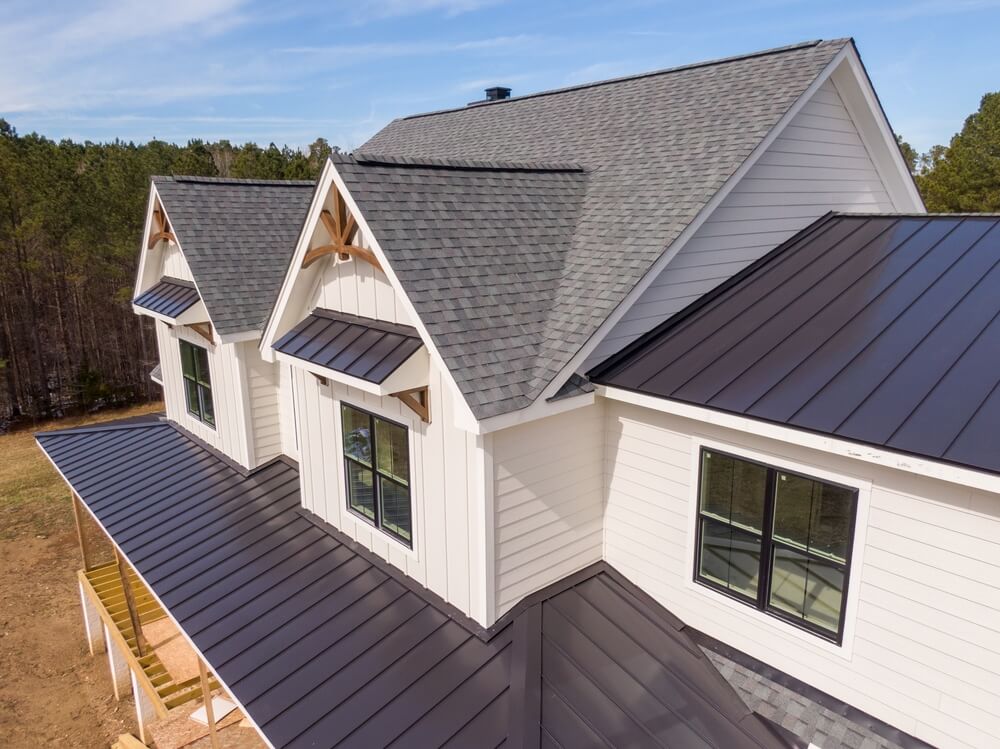
Is Metal Roofing Worth It in Maryland?
Metal roofs have moved from a niche commercial product to a serious residential consideration, especially in coastal markets like Southern Maryland, where wind, salt air, and humidity punish conventional shingles harder than the national average. The pitch is compelling: a roof that lasts 50 years, handles 140 mph winds, cuts your cooling bills, and may earn you an insurance discount. The catch is that the upfront price tag is considerably higher than what you’d pay for an architectural asphalt shingle roof.
That’s the question most Maryland homeowners are really asking when they research metal roofing. Not whether it works, but whether the extra investment makes sense for their home, their timeline, and their budget. The honest answer depends on a handful of specific factors. For some homeowners, a metal roof is genuinely the smartest long-term decision they can make. For others, asphalt shingles are still the better fit.
Quick Answer: Is a Metal Roof Worth It for Your Maryland Home?
A metal roof is generally worth the higher upfront cost for Southern Maryland homeowners who plan to stay in their home for 15+ years, own waterfront or near-waterfront property exposed to Chesapeake Bay wind and salt air, prioritize long-term value over short-term cash flow, or want to maximize energy efficiency and insurance savings. For homeowners with shorter ownership horizons, tighter budgets, or strict HOA restrictions on roof appearance, architectural asphalt shingles often remain the better choice.
The short version: a metal roof in Southern Maryland costs considerably more than an architectural asphalt shingle roof installed on a comparable home. That’s a meaningful premium, but the metal roof will likely outlast two asphalt roofs at that price point. Whether that math works for you depends on factors worth unpacking.
How Does the Cost of a Metal Roof Compare to Asphalt in Maryland?
In Southern Maryland, an architectural asphalt shingle roof is the more affordable option, while a standing seam metal roof represents a considerably higher initial investment. Metal shingles fall in between. The premium for metal can range from significant to substantial over asphalt, but metal lifespans of 40–70 years versus around 30 for asphalt change the lifetime cost picture significantly. Get specific quotes from a licensed Maryland roofing contractor for current local pricing on your specific home.
| Roof Type | Relative Cost | Typical Lifespan in Maryland |
| Three-Tab Asphalt | Most affordable upfront option | 15–20 years |
| Architectural Asphalt | Mid-range; the standard Maryland choice | 25–50 years |
| Luxury Asphalt | Premium asphalt tier | 30–50 years |
| Metal Shingles | Higher than asphalt; lower than standing seam | 30–50 years |
| Standing Seam Metal | Premium long-term investment | 40–70 years |
Standing seam aluminum systems for waterfront properties in Chesapeake Beach, Solomons, and along the Patuxent River carry an additional premium due to the coastal-grade hardware and corrosion-resistant materials required for that exposure. A free, no-pressure estimate from a local contractor is the most reliable way to see what your specific project will cost—pricing varies based on roof size, pitch, complexity, material availability, and current market conditions.
What Are the Pros of Metal Roofing in Southern Maryland?
The strongest advantages of metal roofing in Southern Maryland are exceptional longevity (40–70 years for standing seam), industry-leading wind resistance (140+ mph for coastal exposure), summer energy savings of 10–25% from reflective surfaces, potential homeowner’s insurance discounts ranging from modest to substantial, Class A fire resistance, immunity to algae and moss growth, and superior performance on waterfront homes where salt air degrades asphalt shingles ahead of schedule.
Pro #1: Outlasts Two Asphalt Roofs
A properly installed standing seam metal roof in Maryland lasts 40–70 years—often the last roof you’ll buy as a homeowner. Architectural asphalt shingles last 25–50 years in our climate, which means most homeowners staying in their home long-term will replace asphalt twice in the time it takes to wear out one metal roof.
Pro #2: Wind Performance for Coastal Maryland
Standing seam systems are independently tested to 140+ mph wind ratings under UL 580 and ASTM E1592 standards. For homes within two miles of the Chesapeake Bay or major tidal tributaries, where sustained wind loads degrade asphalt at the nail zone faster than in inland markets, this isn’t a luxury upgrade. It’s the engineering answer to a documented local condition.
Pro #3: Lower Cooling Costs
Reflective metal surfaces with Kynar 500 paint finishes can reduce summer attic temperatures by 30–40°F, cutting cooling costs by 10–25% during Maryland’s humid summers. Over the life of the roof, those savings add up meaningfully on most household energy bills.
Pro #4: Insurance Discounts
Major carriers, including State Farm, Allstate, USAA, and Liberty Mutual, offer homeowner’s insurance discounts for qualifying metal roofs, particularly Class 4 impact-rated systems. The actual discount varies by carrier and policy structure, talk to your agent before installation and confirm what your specific policy offers.
Pro #5: Salt Air Immunity
Aluminum standing seam panels are naturally corrosion-resistant and perform indefinitely in salt-air environments. For waterfront properties in North Beach, Solomons, and other coastal communities across Calvert County, this resistance to salt-driven corrosion is one of the strongest arguments for metal.
Pro #6: No Algae or Moss
Maryland’s humid climate is famously hard on asphalt shingles—the black algae streaks visible on countless roofs across the region are organic growth feeding on the limestone filler in the shingles. Metal panels have no organic material for algae or moss to consume, so they stay clean throughout their service life.
What Are the Cons of Metal Roofing You Should Know About?
The honest downsides of metal roofing include considerably higher upfront cost compared to architectural asphalt, fewer qualified installers (which can affect repair turnaround), more difficult and expensive individual panel repairs, cosmetic dent risk from significant hail, a more contemporary aesthetic that may not fit traditional homes or HOA-restricted neighborhoods, and limited paint color matching when individual panels eventually need replacement.
Con #1: Higher Upfront Cost
There’s no getting around it, metal costs considerably more upfront than asphalt. That difference is real money, and it’s a barrier for homeowners with tight budgets or short ownership horizons. The lifetime-value math favors metal for long-term homeowners, but only if you can stomach the initial cost.
Con #2: Fewer Qualified Installers
Metal roof installation requires specialized training, tools, and experience that not every Maryland roofing contractor has. A standing seam roof installed poorly can leak, oil-can (develop visible waves), or fail prematurely. Choosing a contractor with documented metal roofing experience is more important here than with asphalt.
Con #3: Repairs Can Be Difficult
If a tree limb damages a standing seam panel, repair usually means replacing the entire panel from ridge to eave—and matching the existing paint finish exactly can be challenging after years of UV exposure. Metal repairs require the same specialized skills as installation, which can mean longer wait times when something goes wrong.
Con #4: Hail Denting (Cosmetic)
Heavy hail can dent metal panels even on Class 4 impact-rated systems. The dents are typically cosmetic—they don’t affect performance or watertightness—but they can be visible from the ground depending on the angle and lighting. If you live in an area with significant hail risk and visual perfection is important to you, this is worth weighing.
Con #5: Aesthetic Fit and HOA Restrictions
Standing seam panels have a distinct contemporary look that fits modern, farmhouse, and coastal architectural styles beautifully, but may feel out of place on a traditional colonial or Cape Cod. Some Southern Maryland HOAs restrict roofing materials to traditional asphalt shingles. Check your HOA bylaws before committing.
Con #6: Initial Out-of-Pocket Even with Insurance
Even if your homeowner’s insurance is paying for a storm-damaged roof replacement under an RCV policy, the settlement is based on like-kind-and-quality replacement—meaning if you had asphalt, the payout reflects an asphalt replacement. Upgrading to metal often requires paying the difference out of pocket.
What’s the Lifetime Value of Metal vs. Asphalt Over 50 Years?
Over a 50-year window, a homeowner who installs a single metal roof typically incurs one major roofing investment. A homeowner who installs architectural asphalt during the same period typically replaces it once or twice, plus absorbing the disruption of multiple replacement projects. When energy savings and potential insurance discounts are factored in, the long-term cost picture often favors metal for homeowners staying in their home for the long haul.
Forget specific numbers for a moment and look at the structure of the decision. Over 50 years:
- The metal homeowner buys one roof. They pay a higher upfront price, then enjoy decades of low maintenance and no replacement project.
- The asphalt homeowner typically could buy two roofs (sometimes three for three-tab installations). Each replacement means tear-off costs, installation costs, and the disruption of having crews on the property.
- The metal homeowner accumulates energy savings every summer from reflective cooling performance—10–25% reductions in air conditioning costs add up across decades.
- The metal homeowner may capture annual insurance discounts on every premium payment for the entire ownership period.
This is why metal often wins the lifetime cost comparison even though it loses the upfront cost comparison. The right way to think about a metal roof is not as a roofing expense but as a long-term capital investment that pays back through avoided replacement costs, reduced energy use, and lower insurance premiums.
Which Maryland Homeowners Benefit Most from Metal Roofs?
Metal roofing delivers the strongest value for Southern Maryland homeowners who own waterfront or near-waterfront property exposed to Chesapeake Bay wind and salt, plan to stay in the home for at least 15–20 years, prioritize energy efficiency and long-term cost over upfront savings, want minimal lifetime maintenance, or live on rural acreage where fire resistance and longevity are particularly valuable.
Metal makes the most sense if you fit one or more of these profiles:
- Waterfront and coastal homeowners. Properties along the Chesapeake Bay, Patuxent River, and tidal tributaries face wind loads and salt-air exposure that asphalt shingles handle poorly. Standing seam aluminum is engineered for these conditions.
- Long-term residents. If you plan to stay in your home 15+ years—and especially if this is your forever home—the lifetime cost math favors metal substantially.
- Energy-conscious homeowners. If you’re investing in solar panels, high-efficiency HVAC, or whole-home weatherization, a reflective metal roof complements those investments and amplifies your savings.
- Rural and acreage properties. Homes on larger lots in Owings, Sunderland, and rural St. Mary’s County benefit from metal’s Class A fire resistance, particularly during dry summer conditions.
- Homeowners replacing storm-damaged roofs. If you’re already going to be without a finished roof for a few days, the timing is right to upgrade to a system that won’t need to be touched again.
When Does Asphalt Make More Sense Than Metal?
Architectural asphalt shingles remain the better choice for Maryland homeowners planning to sell within 5–10 years, those working within a tighter budget, properties governed by HOAs that restrict roofing materials to traditional shingles and homes whose architectural style would clash with the contemporary look of standing seam panels. For these scenarios, a premium architectural asphalt roof delivers excellent long-term value at a more accessible upfront cost.
Asphalt remains the right answer when:
- You’re planning to sell within 5–10 years. A new metal roof can boost resale appeal, but you typically don’t recoup the full premium versus asphalt. Architectural shingles deliver strong buyer appeal at a lower upfront cost.
- Budget is the primary constraint. An architectural asphalt roof is considerably less expensive than metal and still delivers 25–50 years of strong performance in Maryland.
- HOA restrictions limit your options. Some planned communities across Southern Maryland mandate traditional shingles. If standing seam isn’t approved, metal shingles may be allowed—but that’s a conversation to have with your HOA before you fall in love with metal.
- Your home is architecturally traditional. A classic colonial, Federal-style, or Victorian home can look out of place under contemporary standing seam. Premium asphalt or metal shingles that mimic slate or shake may be a better aesthetic match.
Will a Metal Roof Increase Your Home’s Resale Value?
A metal roof typically recoups a substantial portion of its installation cost at resale according to Remodeling Magazine’s Cost vs. Value reports, similar to or slightly better than asphalt shingles. Where metal stands out is in buyer perception: a newly installed metal roof signals durability, low maintenance, and energy efficiency, which can speed up the sale and attract buyers willing to pay a premium for move-in-ready homes.
If you’re evaluating a metal roof primarily as a resale strategy, the answer is nuanced. The Remodeling Magazine Cost vs. Value Report consistently shows roofing as one of the best-recouping home improvements, but you generally don’t earn back 100% of the premium for upgrading from asphalt to metal at resale.
Where metal helps more clearly is in selling speed and buyer confidence. Maryland real estate agents frequently report that homes with newer metal roofs spend fewer days on the market and attract less haggling from inspection reports, because the buyer knows they’re not facing a roof replacement in the next 5–10 years.
What Should You Look for in a Maryland Metal Roof Contractor?
Choosing a qualified metal roofing contractor in Maryland requires verifying their MHIC license, confirming documented experience installing standing seam systems (not just exposed fastener panels), reviewing manufacturer certifications, looking at completed local projects, and confirming they offer both manufacturer product warranties and workmanship warranties. A well-installed metal roof can last 50+ years; a poorly installed one can fail in five.
Specific things to verify before signing a metal roofing contract:
- Maryland MHIC license. Required for any project over $500. Verify through dllr.state.md.us.
- Standing seam experience. Some roofers install standing seam regularly; others have only installed screw-down panels on barns. Ask to see standing seam projects they’ve completed in the past two years.
- Manufacturer relationships. Established metal roofing contractors maintain direct relationships with major manufacturers, which affects warranty coverage and material quality.
- Workmanship warranty. Manufacturer warranties cover the panels and paint; workmanship warranties cover the installation. Both matter. A contractor’s confidence in their workmanship warranty tells you a lot.
- Local references. Ask for addresses of completed metal roofs in your area—ideally homes you can drive by. A 30-year track record in Calvert County is more meaningful than five-star reviews from out of state.
Get an Honest Metal vs. Asphalt Comparison for Your Maryland Home
The metal-vs-asphalt decision is one of the most consequential roofing choices a Maryland homeowner makes. The right answer depends on your home, your timeline, your budget, and your priorities, and a 30-minute conversation with an experienced local contractor can clarify it faster than weeks of independent research.
G.H. Clark Contractors has been installing both metal and asphalt roofs across Calvert, St. Mary’s, and Anne Arundel counties for over 30 years. We don’t push metal on homeowners who’d be better off with asphalt, and we don’t talk people out of metal when it’s the right call for their property. Our recommendations are honest, our estimates are free, and our financing options make either path manageable. Call us at (410) 414-7060 to schedule your consultation.
Frequently Asked Questions About Metal Roofing in Maryland
How long does a metal roof last in Maryland’s climate?
Standing seam metal roofs typically last 40–70 years in Maryland’s climate when properly installed. Metal shingles last 30–50 years. Exposed fastener systems on outbuildings last 25–50 years. The biggest factors affecting lifespan are installation quality, material selection (aluminum lasts longer than steel near salt water), and paint finish quality. Premium Kynar 500 finishes hold up far better than standard polyester paint.
Will a metal roof make my house hotter in the summer?
Just the opposite. Reflective metal surfaces with Kynar 500 finishes bounce solar heat away from the home, reducing summer attic temperatures by 30–40°F compared to dark asphalt shingles. Homeowners typically see cooling cost reductions of 10–25% during Maryland’s hot, humid summers.
Can I install a metal roof over my existing asphalt shingles?
In many cases, yes, and it’s one of the practical advantages of metal roofing. Installing over existing shingles saves on tear-off and disposal costs and provides additional thermal buffering. Maryland building code allows this in most cases, provided the structure can handle the load. A licensed contractor evaluates your specific situation during the estimate to confirm whether a layover is appropriate for your home.
Is a metal roof louder in the rain than asphalt?
Modern residential metal roofs are installed over solid decking, underlayment, and attic insulation, which dampen sound effectively. Homeowners with metal roofs typically report that rainfall sounds no louder (and sometimes quieter) than under their previous asphalt roof.
Do metal roofs require maintenance?
Far less than asphalt. Annual visual inspections, occasional fastener checks at penetrations, and keeping gutters clear are typically all that’s required. There’s no granule loss to worry about, no algae streaks to clean, and no shingles to replace after storms. For most homeowners, a metal roof is essentially “set and forget.”
Is financing available for a metal roof?
Yes. Metal roofs are a meaningful investment, and most reputable Maryland roofing contractors offer flexible financing to spread the cost into manageable monthly payments. G.H. Clark offers multiple financing options.