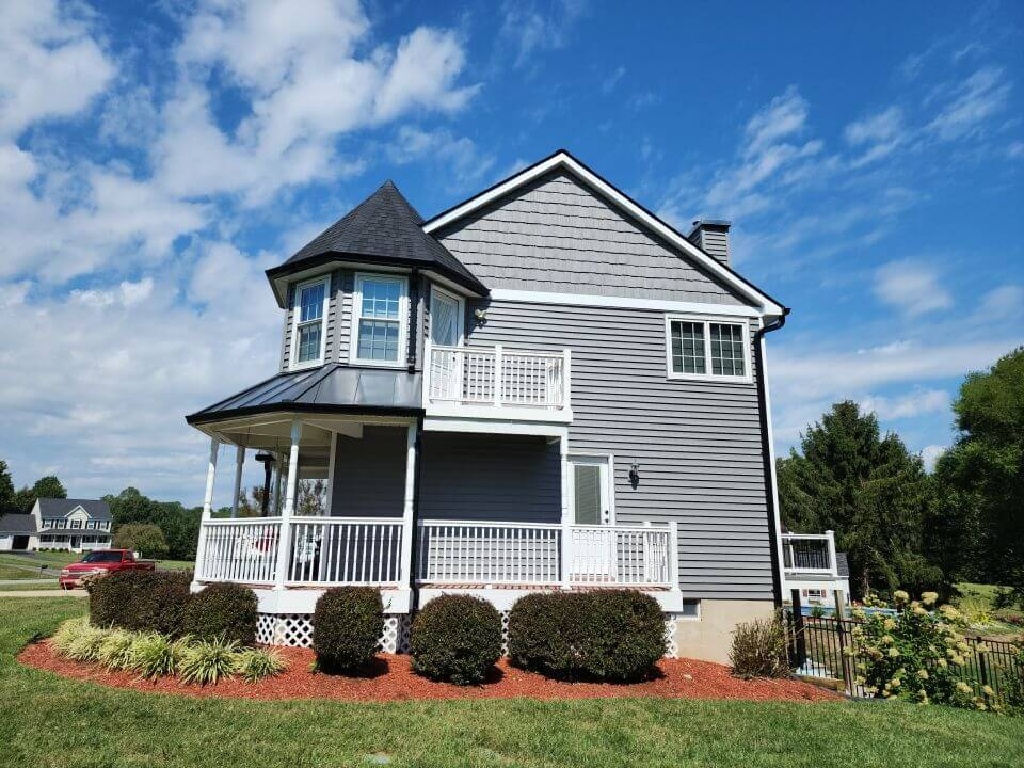
Standing Seam and Metal Roofing in Southern Maryland
A properly installed metal roof can be the last roof a Maryland homeowner ever buys. With service lifespans of 40 to 70 years, wind ratings of 140+ mph, and energy-reflective surfaces that can cut summer cooling costs by 10–25%, metal roofing has shifted from a niche commercial product to a serious residential choice—particularly for waterfront homes and properties exposed to the wind loads that come off the Chesapeake Bay.
The trade-off is real. A metal roof costs significantly more upfront than asphalt shingles. But spread that cost across 50 years of service life and the math often favors metal, especially when factoring in lower maintenance, potential insurance discounts, and energy savings.
At G.H. Clark Contractors, we install standing seam, exposed fastener, and metal shingle systems across Calvert County, St. Mary’s County, and Anne Arundel County. As a family-owned business based in Prince Frederick for over 30 years, we’ve seen what works—and what doesn’t—on metal roof installations throughout the region. Our recommendations are based on your home’s exposure, your long-term plans, and what makes engineering sense for your specific application—not on which product carries the highest manufacturer rebate.
Why Are More Southern Maryland Homeowners Choosing Metal Roofs?
Metal roofs are gaining popularity in Southern Maryland for four primary reasons: exceptional longevity (40–70 years vs. 25–30 for asphalt), superior wind resistance for coastal and Chesapeake Bay exposure (140+ mph ratings), energy efficiency from reflective surfaces (10–25% cooling cost reduction), and potential homeowner’s insurance discounts of 5–35%. For waterfront properties and homeowners planning to stay in their home long-term, metal often delivers better lifetime value than asphalt shingles.
The case for metal roofing in our region comes down to a few practical advantages:
- Lifespan: 40–70 years for a properly installed standing seam system, versus 25–30 years for architectural asphalt shingles. Many metal roofs outlast the homes they protect.
- Wind resistance: Standing seam systems independently tested to 140+ mph wind ratings—well above what nor’easters and tropical storm remnants typically deliver in Southern Maryland.
- Fire resistance: Class A fire rating, the highest available. Metal won’t ignite from sparks, embers, or radiant heat.
- Energy efficiency: Reflective coatings can reduce summer attic temperatures by 30–40°F, cutting cooling costs by 10–25% during Maryland’s humid summers.
- Hail and impact resistance: Class 4 impact ratings on many systems, which can qualify for insurance discounts.
- Low maintenance: No algae, no granule loss, no shingle blow-offs. Periodic inspection and occasional fastener checks are typically all that’s required.
- Recyclable: Metal roofs are 100% recyclable at end of service life, and most steel panels contain 25–95% post-consumer recycled content at manufacture.
What Types of Metal Roofs Does G.H. Clark Install?
G.H. Clark installs three main metal roofing systems: standing seam (hidden fastener panels with concealed clips, the premium choice for living spaces); exposed fastener (screw-down corrugated or ribbed panels, ideal for sheds, barns, and outbuildings); and metal shingles (stamped panels that mimic the look of slate, shake, or traditional shingles). Each system has specific applications, and we help you match the right product to your specific roof and use case.
Standing Seam (Hidden Fastener) Systems
Standing seam is the gold standard of residential metal roofing. The panels run vertically from ridge to eave with raised seams at 12– to 18-inch intervals, and they’re held in place by concealed clips that allow the metal to expand and contract with temperature changes without compromising the seal. Because the fasteners are hidden beneath the panels, there are no exposed screw heads or rubber gaskets that can degrade and leak over time.
We always recommend standing seam for any structure that’s climate-controlled or considered living space—your home, an addition over a heated basement, a converted garage, or a sunroom. The hidden-fastener design is what gives standing seam its 40–70 year lifespan and its industry-leading wind ratings.
Exposed Fastener (Screw-Down) Metal Panels
Exposed fastener systems—sometimes called “screw-down” or “through-fastened” metal—are less expensive than standing seam and faster to install. The panels are secured directly to the roof deck with hundreds of screws that pass through the metal surface, each with a rubber gasket that creates the weather seal.
Here’s the catch: each one of those screws and gaskets will most likely fail before the metal panel itself wears out. Rubber gaskets dry out, crack, and lose their seal—typically within 15–20 years. When that happens, every screw hole becomes a potential leak point. For this reason, exposed fastener systems are best suited for sheds, barns, detached garages, pole buildings, and outbuildings where occasional gasket replacement is acceptable. We don’t typically recommend exposed fastener metal over a heated living space.
Metal Shingles
Metal shingles are individual stamped panels designed to look like traditional asphalt shingles, slate tiles, or cedar shake from the ground while delivering metal-roof performance. They offer most of the benefits of standing seam—30 to 50-year lifespan, 120+ mph wind ratings, fire and algae resistance—with a more conventional appearance that fits historic homes or HOA-restricted neighborhoods better than the modern vertical-seam look.
Metal shingles are installed with hidden fasteners similar to standing seam and typically cost $12,000–$25,000 installed for a Southern Maryland home. For homeowners who want metal durability without the contemporary aesthetic, this is often the right answer.
What’s the Real Difference Between Standing Seam and Exposed Fastener Metal?
Standing seam metal uses concealed clips and hidden fasteners that allow thermal movement and create no penetration points through the metal surface—resulting in 40–70 year lifespans. Exposed fastener metal uses screws driven directly through the panel face into the deck, with rubber gaskets that typically dry out and fail within 15–20 years. Standing seam is the right choice for any heated living space; exposed fastener is appropriate for sheds, barns, and outbuildings.
| Feature | Standing Seam | Exposed Fastener |
| Fastener Visibility | Hidden beneath panels via concealed clip system | Visible screws (often hundreds) penetrate the panel surface |
| Lifespan | 40–70 years | 25–40 years (limited by gasket life) |
| Thermal Movement | Floating clip system allows panels to expand and contract | Rigid screw connection restricts movement, stressing panels |
| Leak Risk Over Time | Very low—no penetration points through panel face | Higher—gaskets dry out, screws back out, panels develop holes |
| Installed Cost | $10–$18 per sq ft | $3.50–$7 per sq ft |
| Best Application | Climate-controlled living space, primary residence, additions | Sheds, barns, pole buildings, detached garages, outbuildings |
Which Metal Type Is Right for Your Maryland Roof?
Steel is the most common and cost-effective metal roofing material, typically galvanized and coated for corrosion resistance. Aluminum costs slightly more but is naturally corrosion-resistant—making it the preferred choice for waterfront homes exposed to salt air. Copper and zinc are premium options with 75–100+ year lifespans and distinctive patina finishes, used on architectural and luxury homes. Each metal’s performance and aesthetic differ significantly.
Most residential metal roofs use either steel or aluminum. Here’s how the major options compare:
| Metal | Strengths | Best For |
| Galvanized or Galvalume Steel | Most affordable, widely available, strong and durable with proper coating, easy to work with | Most residential homes; inland properties without significant salt-air exposure |
| Aluminum | Naturally corrosion-resistant, lightweight, exceptional performance in salt-air environments | Waterfront homes near the Chesapeake Bay or Patuxent River; properties within 1–2 miles of tidal water |
| Copper | 75–100+ year lifespan, develops distinctive green patina over decades, no painting required | Architectural accents, dormers, bay windows, historic restoration projects |
| Zinc | 100+ year lifespan, self-healing surface, distinctive blue-grey patina, premium aesthetic | Custom luxury homes; architecturally significant properties |
What’s the Best Paint Finish for a Maryland Metal Roof?
Kynar 500 (also known as PVDF or fluoropolymer) is the industry-leading paint finish for metal roofing—it resists fading, chalking, and weathering far better than standard polyester paint systems. A Kynar 500-coated metal roof can hold its color and finish for 30–40 years, with paint warranties to match. We specify Kynar 500 finishes on all of our standing seam installations.
The paint finish on a metal roof matters as much as the metal itself. A premium metal panel with a cheap paint coating will start chalking and fading within five years, while the same panel with a high-performance finish will look new for decades.
Kynar 500 (a trade name for PVDF—polyvinylidene fluoride—resin-based paint systems) is the industry benchmark. It bonds tightly to the metal, resists UV degradation, and doesn’t chalk or fade the way standard polyester coatings do. Major metal roofing manufacturers offer Kynar 500 finishes with 30–40 year paint warranties that match the structural life of the roof itself. We offer Kynar 500 finishes on all of our standing seam installations, and we recommend it for any metal roof going on a primary residence in Southern Maryland.
How Much Does a Metal Roof Cost in Southern Maryland?
Most Southern Maryland homeowners pay $14,000–$28,000 for a standing seam metal roof in 2026, depending on home size, pitch, and proximity to tidal water. Metal shingles run $12,000–$25,000. Exposed fastener systems are significantly less at $7,000–$15,000, but are recommended only for outbuildings. Properties near the Chesapeake Bay typically require coastal-grade hardware and aluminum panels, adding $1,200–$3,500 to the base cost.
| System Type | Cost Per Sq Ft (Installed) | Typical 2,000 Sq Ft Home | Lifespan |
| Standing Seam (Steel) | $10–$15 | $20,000–$30,000 | 40–60 years |
| Standing Seam (Aluminum) | $13–$18 | $26,000–$36,000 | 50–70 years |
| Metal Shingles | $7–$22 | $14,000–$44,000 | 30–50 years |
| Exposed Fastener (Outbuildings) | $3.50–$7 | $7,000–$14,000 | 25–40 years |
Project costs vary based on roof pitch, complexity, number of penetrations, panel widths, paint finish quality, and existing deck condition. Properties near the Chesapeake Bay typically require coastal-grade aluminum panels and stainless or coated fasteners, which add to the base cost but pay back in extended service life. G.H. Clark provides free, transparent estimates so you know exactly what your specific project will cost. Call us at (410) 414-7060 to schedule your consultation.
How Does Maryland’s Climate Affect Metal Roof Performance?
Metal roofs perform exceptionally well in Maryland’s climate. The reflective surface manages summer heat, the rigid panel structure handles snow and ice loads, and standing seam systems are essentially impervious to nor’easter winds. The primary climate-specific consideration is salt-air exposure near the Chesapeake Bay, which requires aluminum panels or coastal-grade galvanized steel rather than standard residential galvanized products.
| Maryland Climate Factor | Impact on Metal Roofing | Why It Outperforms Asphalt |
| Chesapeake Bay Humidity | Aluminum and properly coated steel are unaffected by sustained humidity. | No algae or moss can grow on metal; no organic material to feed mold or rot. |
| Salt Air Exposure | Standard galvanized steel corrodes faster near saltwater; aluminum is naturally resistant. | Aluminum or coastal-grade systems handle salt-air exposure indefinitely. |
| Summer Heat & UV | Reflective Kynar finishes bounce solar energy away, reducing attic heat gain by 30–40°F. | Cool-metal roofing can cut summer cooling costs by 10–25%. |
| Nor’easters & Hurricanes | Standing seam systems tested to 140+ mph wind ratings under UL 580 and ASTM E1592. | No shingles to lift, no exposed fasteners to back out, hidden clips absorb wind stress. |
| Winter Snow & Ice | Snow slides off smooth metal surfaces; no granule loss from freeze-thaw cycling. | No ice dam formation when properly installed with snow guards in appropriate areas. |
| Hail (occasional) | Class 4 impact-rated systems resist hail damage that would crack asphalt shingles. | Insurance discounts often apply for Class 4-rated metal systems. |
What Are the Most Common Metal Roof Myths?
The most persistent metal roof myths are that metal roofs are loud in rain, attract lightning, rust quickly, cost too much to be worth it, and look industrial or out of place on traditional homes. Modern metal roofing installations include underlayment and decking that make rainfall no louder than under an asphalt roof, are no more likely to attract lightning, use corrosion-resistant alloys and coatings that prevent rust, and offer aesthetic options that fit any architectural style.
Myth: Metal Roofs Are Loud in the Rain
This myth comes from old-time uninsulated barns where rain hit bare metal directly. Modern residential metal roofs are installed over solid decking, underlayment, and attic insulation, which together provide more sound-dampening than most asphalt installations. Homeowners with metal roofs regularly report that rainfall is no louder—and sometimes quieter—than under their old asphalt roof.
Myth: Metal Roofs Attract Lightning
Metal roofs do not attract lightning. Lightning seeks the path of least resistance to ground, and a roof’s height and location matter far more than its material. In fact, the National Fire Protection Association notes that metal roofs may actually be safer in a lightning strike because metal is non-combustible and disperses electrical energy more safely than wood-framed roofing.
Myth: Metal Roofs Rust
Modern metal roofing materials are engineered specifically to prevent rust. Galvanized steel has a zinc coating that protects the underlying metal; Galvalume adds aluminum to the coating for even better corrosion resistance; and aluminum panels don’t rust at all. With proper installation and material selection for the local exposure, rust is not a meaningful concern over the lifetime of the roof.
Myth: Metal Roofs Are Too Expensive to Justify
On a 25-year horizon, asphalt is cheaper. On a 50-year horizon, metal is usually less expensive once you factor in the cost of replacing an asphalt roof twice during the period a single metal roof lasts. For homeowners planning to stay in their home long-term, particularly waterfront properties exposed to demanding conditions, metal often delivers better lifetime value.
Myth: Metal Roofs Look Industrial
Standing seam panels do have a distinctive contemporary appearance that fits modern, farmhouse, and coastal architectural styles beautifully. For homeowners who want metal performance without the modern look, metal shingles are designed to mimic the appearance of asphalt, slate, or cedar shake from the ground. The aesthetic options today are far broader than they were even ten years ago.
Will a Metal Roof Lower My Homeowner’s Insurance Premium?
Many homeowner’s insurance carriers offer premium discounts of 5–35% for metal roofs, particularly those with Class 4 impact ratings and high wind ratings. Discounts vary significantly by carrier and policy. Some Maryland insurers also offer reduced premiums for fire-resistant Class A roofing. Always confirm specific discounts with your insurance agent before finalizing your roofing choice.
Insurance discounts on metal roofs come from several places: the fire resistance (Class A rating), the impact resistance (Class 4 in many systems), the wind resistance (140+ mph), and the longevity that reduces the carrier’s exposure to repeat claims.
To maximize your potential discount, talk to your insurance agent before installation, request documentation on the specific system you’re installing (UL listings, ASTM ratings, manufacturer certifications), and confirm that the discount applies to your specific policy structure. We can provide all the technical documentation your insurer will need.
Schedule Your Free Metal Roof Consultation with G.H. Clark Contractors
A metal roof is a long-term decision—and the right one for many Southern Maryland homes, especially those near the Chesapeake Bay and the Patuxent River. The wrong installation, however, can compromise even the best material. At G.H. Clark Contractors, we’ve been installing metal roofs across Calvert County, St. Mary’s County, and Anne Arundel County for more than 30 years, and we’ll give you a straight answer about whether metal is the right choice for your specific home, your timeline, and your budget.
Visit our Prince Frederick showroom to see and feel metal panel samples, finishes, and color options. Or call us at (410) 414-7060 to schedule a free, no-pressure on-site evaluation. Flexible financing is available, so the long-term value of a metal roof can fit into a manageable monthly payment.
Frequently Asked Questions About Metal Roofing in Maryland
Can a metal roof be installed over existing shingles?
In many cases, yes—and it’s one of the appealing aspects of metal roofing for homeowners replacing an aging asphalt roof. Installing over existing shingles saves on tear-off and disposal costs, and the existing layer provides an additional thermal buffer. Local building code permits it in most cases, and the lightweight nature of metal means the structural load remains within acceptable limits. We’ll evaluate your specific situation during the estimate.
How long does a metal roof installation take?
Metal roof installations typically take 3–7 days for a standard residential home, depending on complexity, weather, and whether tear-off is required. Standing seam panels are often roll-formed on-site to the exact length of your roof, which adds setup time but eliminates panel seams that would otherwise be needed.
Does a metal roof affect cell phone or internet signal?
Generally, no. Modern cell signals and Wi-Fi use frequencies and signal strengths that aren’t significantly affected by metal roofing. If you have any signal issues, they almost always originate elsewhere in the home or from your service provider, not from the roof material.
Can hail damage a metal roof?
Heavy hail can dent any metal roof, though Class 4 impact-rated systems resist denting far better than standard panels. Cosmetic dents from hail typically don’t affect performance or watertightness, but they can be visible from the ground on some installations. If hail damage is a concern, specify a Class 4-rated system during your consultation.
Do you offer financing for metal roof installations?
Yes. Metal roofs are a meaningful investment, and we offer flexible financing options to help spread the cost into manageable monthly payments. We’ll discuss specific terms during your consultation.
What warranties come with a G.H. Clark metal roof installation?
Your metal roof will be covered by the manufacturer’s product warranty (typically 30–50 years on the panels and the Kynar 500 paint finish) plus our workmanship warranty on the installation itself. We’ll walk you through the specific warranty details for the system you choose during your consultation.
The following products are available: