Identifying and Preventing Roof Algae Growth: Tips and Techniques
Your roof does more than shield you from the rain; it also plays a big part in your home’s overall appearance. But what happens when streaks of algae make it look old and worn? Roof algae growth can be an unsightly problem that many homeowners face, especially in humid areas where conditions are ripe for growth.
Algae can do more than just spoil the appearance of your roof. It can trap moisture, leading to potential damage over time. It’s important to address and prevent this issue early to avoid costlier repairs later on. Recognizing algae and understanding how it forms helps you take control of the situation before it gets out of hand.
By learning about the causes and impacts of algae, you can take steps to manage and prevent its growth. From routine maintenance to professional treatments, various strategies can help keep your roof algae-free and ensure it continues to protect and beautify your home efficiently.
Understanding Roof Algae
Roof algae are small, plant-like organisms that thrive in damp, shaded areas, often appearing as dark streaks or spots on shingles. Known scientifically as Gloeocapsa Magma, these algae form in colonies and feed on the limestone filler found in some roofing materials. They are particularly common in humid regions, where moisture aids their growth.
Certain conditions make it easier for algae to spread. Shaded areas on your roof, especially those under overhanging branches, are prime spots for growth. The lack of sunlight keeps these areas moist, allowing algae to thrive. Additionally, roofs in regions with high humidity and frequent rainfall provide an ideal climate for these organisms. Without regular maintenance, these conditions allow algae to spread quickly.
Some roof surfaces are more susceptible to algae growth than others. Asphalt shingles are particularly vulnerable due to their composition and textured surface, which traps moisture. Wooden roofs can also attract algae, as they provide organic material that can hold moisture. Even metal roofs are not immune; while algae do not feed on metal, they can grow on the debris that accumulates on the surface. Recognizing these factors helps you understand where your roof might be most at risk.
The Impact of Algae on Your Roof
Algae affect more than just the look of your roof. Their presence results in unsightly dark streaks that can make your home appear older and less well-maintained than it actually is. This discoloration can lower curb appeal and possibly affect property value, especially if you’re considering selling your home.
Beyond appearances, algae can cause structural concerns if left unchecked. They hold moisture against the roof, which promotes the growth of moss and lichen. Over time, these can wear away the protective granules on shingles, reducing their effectiveness. As shingles deteriorate, your roof becomes more vulnerable to leaks and other water damage, leading to costly repairs.
Algae also affect energy efficiency. As dark algae spread, they absorb more sunlight, increasing roof surface temperature. This added heat can make cooling your home more difficult, leading to higher utility bills. A roof’s reflective ability is compromised, making it hard to maintain a comfortable indoor environment. Regular management of algae can thus help preserve both your roof’s function and your home’s energy efficiency.
Identifying Signs of Algae Growth
Spotting algae early can save you a lot of trouble. Look for dark streaks running down your roof. These streaks are the most common sign of algae. They often appear dark blue or black, especially on lighter-colored roofs. You might also notice greenish patches, indicating growing colonies.
It’s important to distinguish algae from other roof stains. Moss and lichen also grow on roofs, but they have a different texture. Moss is fluffy and soft, often forming clumps that sit on top of shingles. Lichen is flat and crusty, appearing as a blend of fungus and algae. Algae, however, are slimy and will spread in streaks rather than isolated patches.
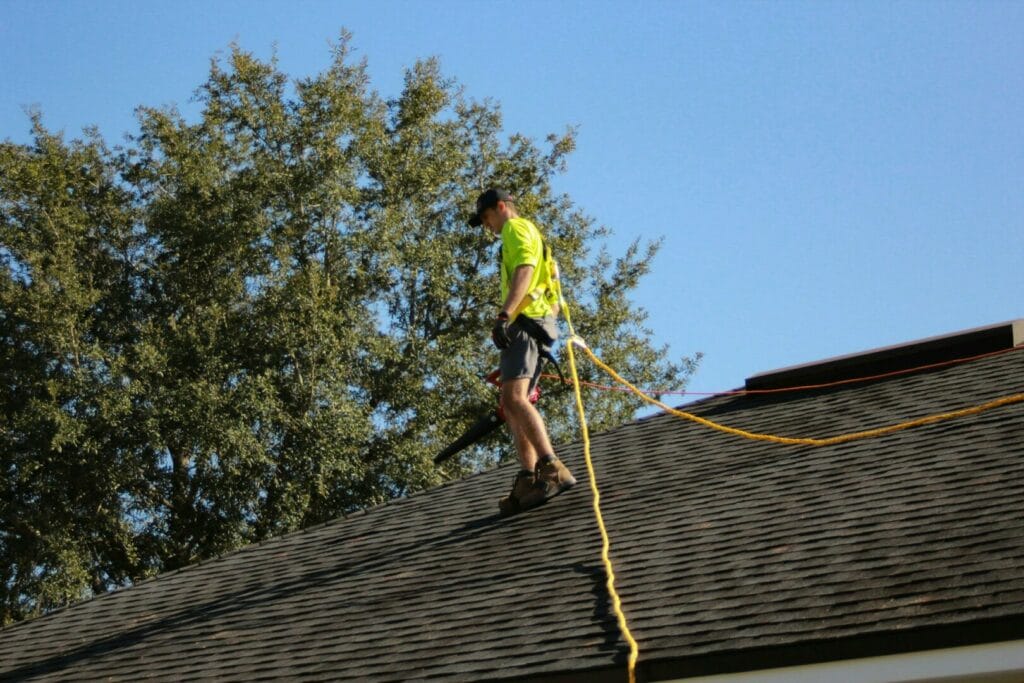
Checking your roof safely is key. Use binoculars from the ground to inspect your roof without climbing. If you need a closer look, hire a professional to evaluate your roof’s condition. They can safely assess the extent of algae growth and determine what action is needed. Regular observation of your roof will help catch any signs of algae from growing into a bigger problem.
Preventing and Managing Algae Growth
There are several ways to tackle algae before it becomes a major concern. Regular maintenance is crucial. Keep your roof clean by trimming overhanging branches to reduce shade and allow sunlight to naturally dry your roof. Ensuring that your gutters are clear will also prevent water from pooling and promoting algae growth.
Professional cleaning is a safe and effective way to manage algae. Using specially formulated treatments, professionals can clean your roof without causing damage to shingles. They have the right equipment and know-how to remove algae while ensuring that the protection of your roof remains intact.
Routine inspections by professionals help spot algae early. Regular checks and timely cleaning will keep your roof free from algae. This approach helps maintain your roof’s appearance and prevents long-term damage. Keeping an eye on your roof and consulting experts ensures that your home stays in top condition.
Conclusion
Algae on your roof may seem like a small issue, but it can quickly develop into significant damage if ignored. By recognizing the signs of algae and understanding the best prevention methods, you maintain both the look and function of your roof. Regular inspections and prompt actions not only prevent further damage but also save money in the long run.
If you’re noticing any signs of algae or want to prevent them from appearing, contact G.H. Clark Contractors. Our team provides expert advice and roofing services to keep it in excellent shape. We ensure your home is protected while maintaining its beauty and energy efficiency. Let’s work together to give your roof the care it needs.